Comparative timeline Art history from around the world next to the history of each society that made it possible, on a single time axis. Each column is a society: expand it to see its art and what was happening to it; the others fold away, but their dots still mark what was going on at the same time.
Show
Art history History Glossary Disciplines
All Rock art Drawing Painting Sculpture Ceramics Metalwork Printmaking Architecture Design Installation Photography Live arts Video and film Digital art Jump to period to 10,000 BCE 10,000 BCE–500 CE 500–1400 1400–1800 1800–1900 1900–1918 1918–1945 1945–1968 1968–1989 1989–today Tap a society or a dot to expand it.
Deep time to 10,000 BCE i about 300,000 years ago Society Jebel Irhoud (Morocco) The oldest known remains of Homo sapiens. Human history begins in Africa.
Wikipedia ↗
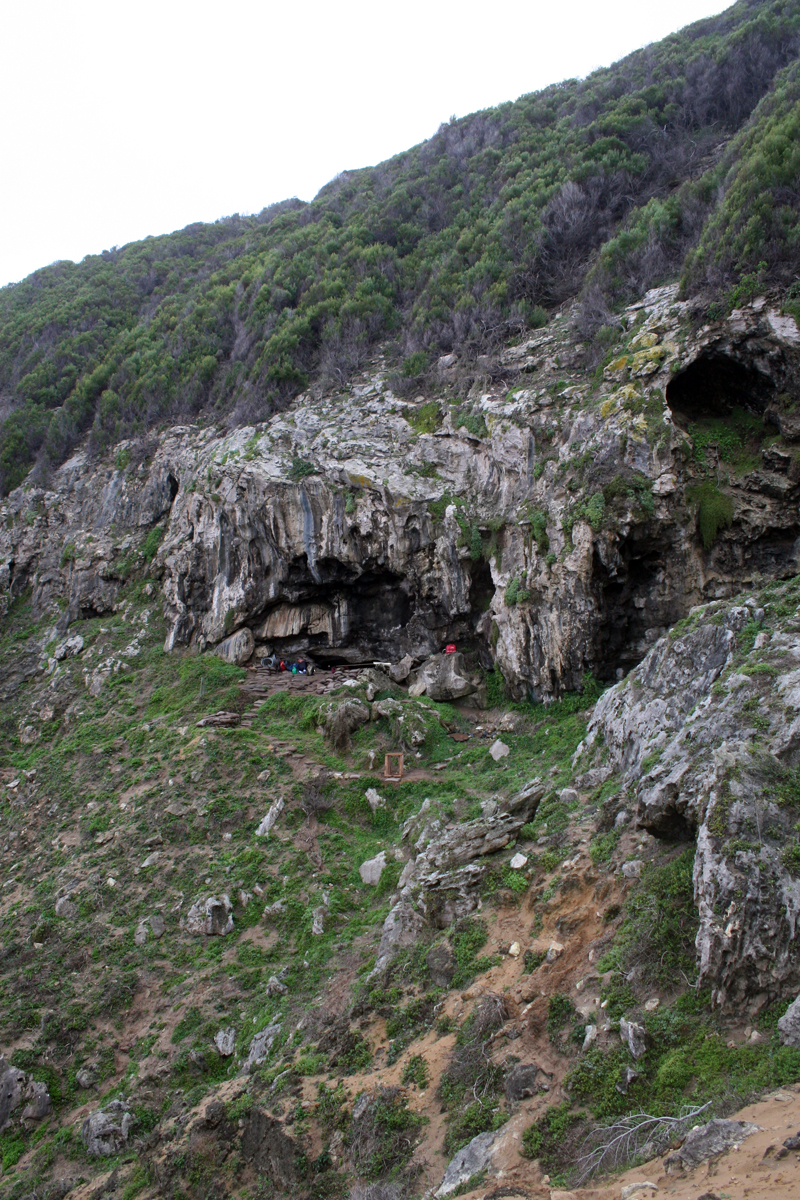
about 75,000 years ago Image : Vincent Mourre / Inrap · CC BY-SA 3.0 Art Engraved ochre from Blombos Cave (South Africa) Cross-hatched lines engraved on ochre, among the oldest known graphic signs.
Drawing · Wikipedia ↗
about 51,200 years ago Art Leang Karampuang (Sulawesi, Indonesia) A scene with human figures and a wild pig; currently the oldest dated figurative painting.
Rock art · Wikipedia ↗
c. 20,000–15,000 BCE Society The first humans reach the Americas Groups from Asia enter the continent and within a few thousand years reach its southern tip.
Wikipedia ↗
about 17,000 years ago Art Lascaux Cave (France) Horses, aurochs and deer painted on the cave walls.
Rock art · Wikipedia ↗
Villages, cities and states 10,000 BCE–500 CE i c. 9500 BCE Art Göbekli Tepe (Türkiye) Large stone pillars carved with animals, raised by hunter-gatherer groups.
Architecture · Sculpture · Wikipedia ↗
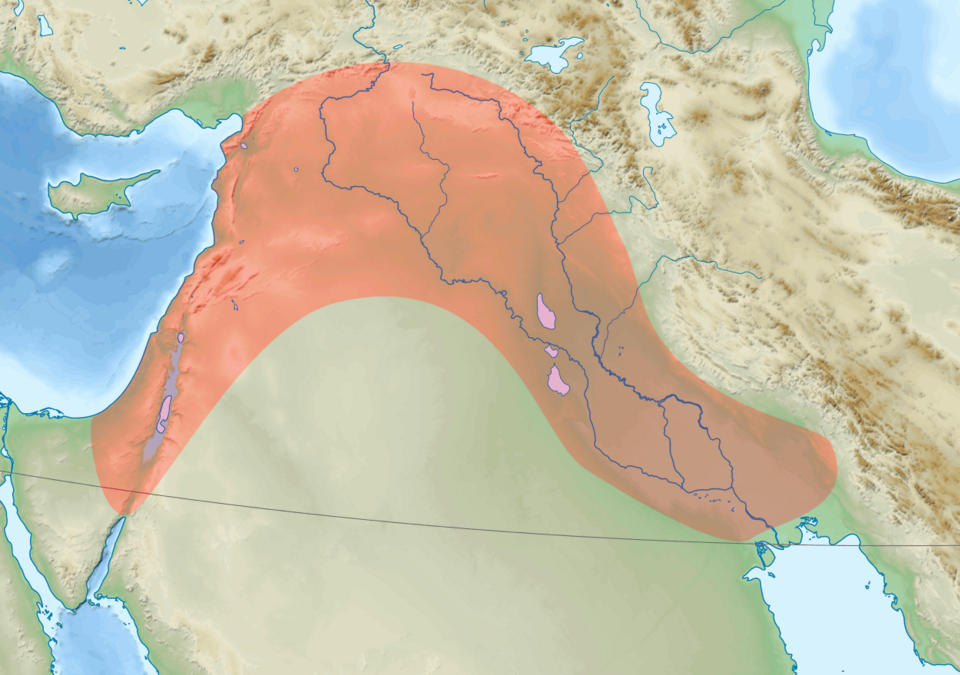
c. 9500 BCE Image : Sémhur derivative work: Rafy · CC BY-SA 3.0 Society First crops in the Fertile Crescent Wheat and barley domesticated in south-west Asia. Farming will arise separately in China, Mesoamerica, the Andes, the Sahel and New Guinea.
Wikipedia ↗
from about 10,000 years ago Art Tassili n'Ajjer (Algeria) Thousands of paintings and engravings recording a green Sahara, with wildlife, herders and everyday life.
Rock art · Wikipedia ↗
c. 3200 BCE Society Writing in Mesopotamia Tablets from Uruk record accounts and tribute. Egypt, China and Mesoamerica will invent their own scripts.
Wikipedia ↗
c. 3100 BCE Society Unification of Egypt Upper and Lower Egypt unite under one king, starting a state that lasts almost three thousand years.
Wikipedia ↗
c. 2600 BCE Glossary Hieratism Rigid, frontal, solemn figures that show no emotion, presenting gods and pharaohs as eternal beings. It appears in Egypt and returns in Byzantine and Romanesque art.
Sculpture · Painting · Wikipedia ↗ · historiadelarte.net ↗
c. 2600 BCE (Ur) Glossary Mosaic An image made of small pieces of stone, shell, glass or ceramic. The Sumerians already use it in the Standard of Ur; Rome, Byzantium and Islam develop it further.
Painting · Architecture · Wikipedia ↗ · historiadelarte.net ↗
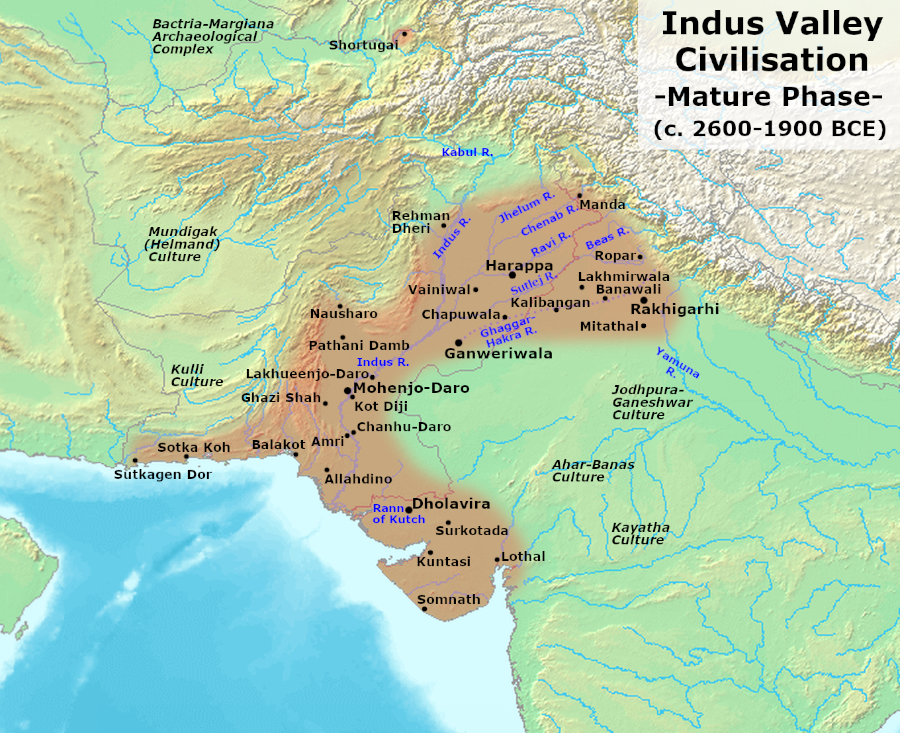
c. 2600–1900 BCE Image : Avantiputra7 · CC BY-SA 3.0 Society Cities of the Indus Valley Harappa and Mohenjo-daro have planned streets, drains and standard weights, with no great palaces.
Wikipedia ↗
c. 1754 BCE Society Code of Hammurabi The king of Babylon carves a law code in stone, with punishments that vary by social class.
Wikipedia ↗
c. 1600 BCE (Crete) Glossary Fresco painting Painting on wet plaster: the colour becomes part of the wall as it dries. Used in Crete, Rome, the Ajanta caves and, above all, the Renaissance.
Painting · Wikipedia ↗ · historiadelarte.net ↗
c. 1600–1046 BCE Society Shang dynasty The first Chinese state with surviving writing, on oracle bones, and a large output of ritual bronzes.
Wikipedia ↗
c. 1200–900 BCE Art Olmec colossal heads (San Lorenzo, Mexico) Monumental portraits carved in basalt, up to three metres tall.
Sculpture · Wikipedia ↗
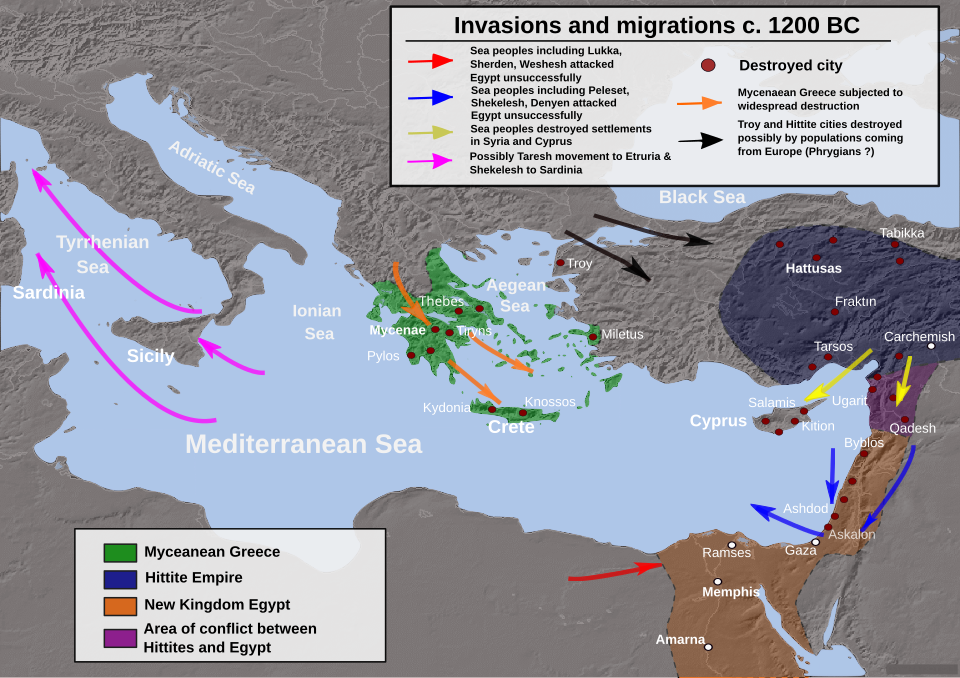
c. 1200 BCE Image : Alexikoua · CC BY-SA 3.0 Society Late Bronze Age collapse The Hittites, Mycenae and many eastern Mediterranean cities fall almost at once.
Wikipedia ↗
11th–9th century BCE Society Phoenician expansion The Phoenicians found colonies across the Mediterranean and spread an alphabet from which Greek and Latin derive.
Wikipedia ↗
c. 900 BCE–1st century CE Art Nok terracottas (Nigeria) Fired clay human figures, the oldest known figurative sculpture south of the Sahara.
Ceramics · Sculpture · Wikipedia ↗
c. 600 BCE Glossary Doric order The plainest Greek order: a column without a base, a fluted shaft and a plain capital. It is the order of the Parthenon.
Architecture · Wikipedia ↗ · historiadelarte.net ↗
c. 560 BCE (Ionia) Glossary Ionic order Born in Ionia, on the coast of present-day Turkey. A slimmer column with a base and a capital of spiral volutes.
Architecture · Wikipedia ↗ · historiadelarte.net ↗
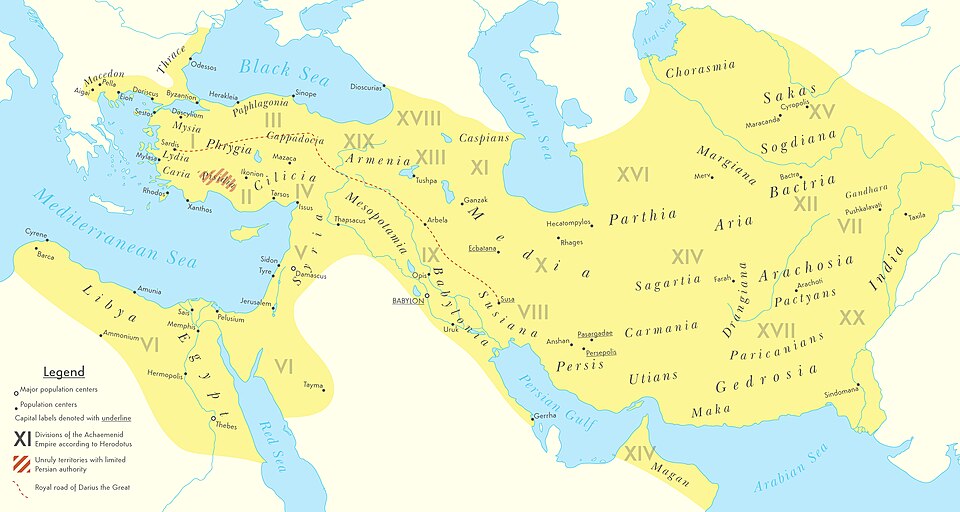
539 BCE Image : Cattette · CC BY 4.0 Society Cyrus takes Babylon The Persian Empire, the largest yet seen, is born and respects local religions.
Wikipedia ↗
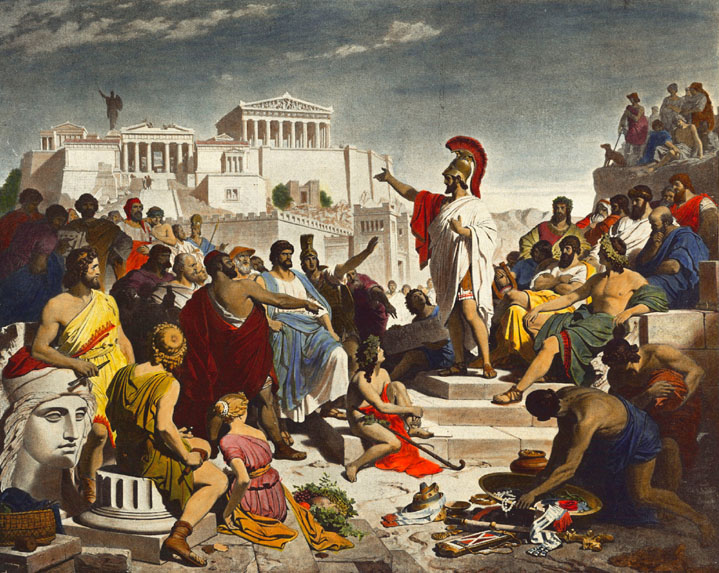
508 BCE Image : Philipp Foltz · Public domain Society Democracy in Athens Cleisthenes gives a voice to free male citizens; women, foreigners and enslaved people remain excluded.
Wikipedia ↗
c. 500 BCE (Nok) Glossary Terracotta Fired clay used for sculpture. The Nok heads in today’s Nigeria are among the oldest in sub-Saharan Africa; the Xi’an army is terracotta too.
Sculpture · Ceramics · Wikipedia ↗ · historiadelarte.net ↗
c. 480–323 BCE Art Classical Greek art Temples built on measured proportions, such as the Parthenon, and sculpture seeking an idealised human body.
Sculpture · Architecture · Wikipedia ↗
Key figures: Fidias , Praxíteles
c. 480 BCE Glossary Contrapposto A pose with the weight on one leg and shoulders and hips tilting in opposite directions. It gives the statue life and movement.
Sculpture · Wikipedia ↗ · historiadelarte.net ↗
c. 440 BCE (Polykleitos) Glossary Canon A rule of proportions for depicting the ideal body. Polykleitos sets one in the Doryphoros; Egypt, India and China have their own canons.
Sculpture · Wikipedia ↗ · historiadelarte.net ↗
c. 430 BCE 4th century BCE Glossary Mimesis Imitation of nature. Plato distrusts it as a copy of a copy; Aristotle sees it as a way of knowing. It guides European art until the 19th century.
Painting · Sculpture · Wikipedia ↗ · historiadelarte.net ↗
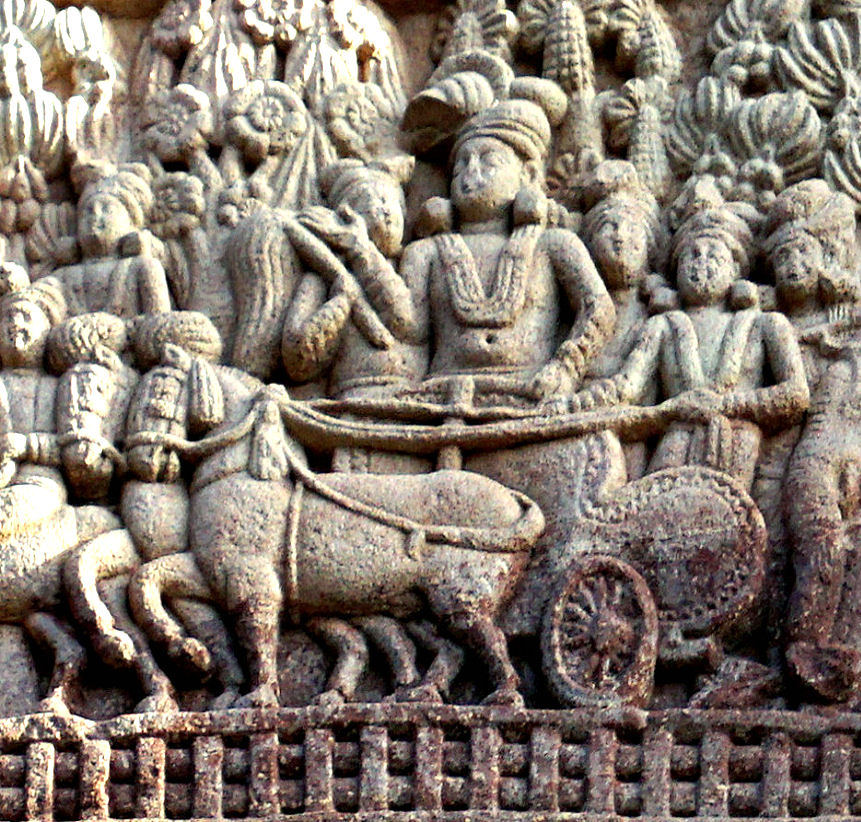
c. 268–232 BCE Image : Photo Dharma from Sadao, Thailand · CC BY 2.0 Society Reign of Ashoka The Maurya emperor renounces war after Kalinga, adopts Buddhism and carves edicts across India.
Wikipedia ↗
221 BCE Society First emperor of China Qin Shi Huang unifies China, its script, its measures and its currency.
Wikipedia ↗
2nd–1st century BCE Society Silk Roads Caravans link China with Persia and the Mediterranean, carrying silk, ideas, religions and diseases.
Wikipedia ↗
c. 1st century BCE–4th century CE Image : Autoría desconocida · Public domain Art Roman art Monumental engineering (arches, vaults, concrete), realistic portraiture and public works across the Mediterranean.
Architecture · Sculpture · Wikipedia ↗
Key figures: Vitruvio
27 BCE Society The Roman Empire begins Augustus concentrates power; Rome dominates the Mediterranean for four centuries.
Wikipedia ↗
around the turn of the era (date debated) Society Amazigh settlement of the Canary Islands Peoples from North Africa reach the islands and develop distinct cultures on each one.
Wikipedia ↗
1st–3rd century Glossary Encaustic Painting with pigments mixed into hot wax. The Fayum portraits in Egypt preserve it with intact colours.
Painting · Wikipedia ↗ · historiadelarte.net ↗
c. 105 Society Spread of paper Paper is perfected in Han China. It reaches the Islamic world in the 8th century and Europe through al-Andalus.
Wikipedia ↗
c. 125 (Pantheon) Glossary Dome A hemispherical vault covering a space. Rome’s Pantheon, Hagia Sophia and Ottoman mosques push it to the limit.
Architecture · Wikipedia ↗ · historiadelarte.net ↗
2nd–4th century Glossary Catacomb Underground cemetery of the early Christians in Rome. Its paintings are the start of Christian iconography.
Painting · Wikipedia ↗ · historiadelarte.net ↗
c. 200 (Teotihuacan) Glossary Talud-tablero A way of building pyramids alternating a sloping wall (talud) and a vertical panel (tablero). It is Teotihuacan’s signature, copied across Mesoamerica.
Architecture · Wikipedia ↗ · historiadelarte.net ↗
c. 320–550 Society Gupta Empire A time of great development in mathematics, astronomy and literature in India; zero comes into general use.
Wikipedia ↗
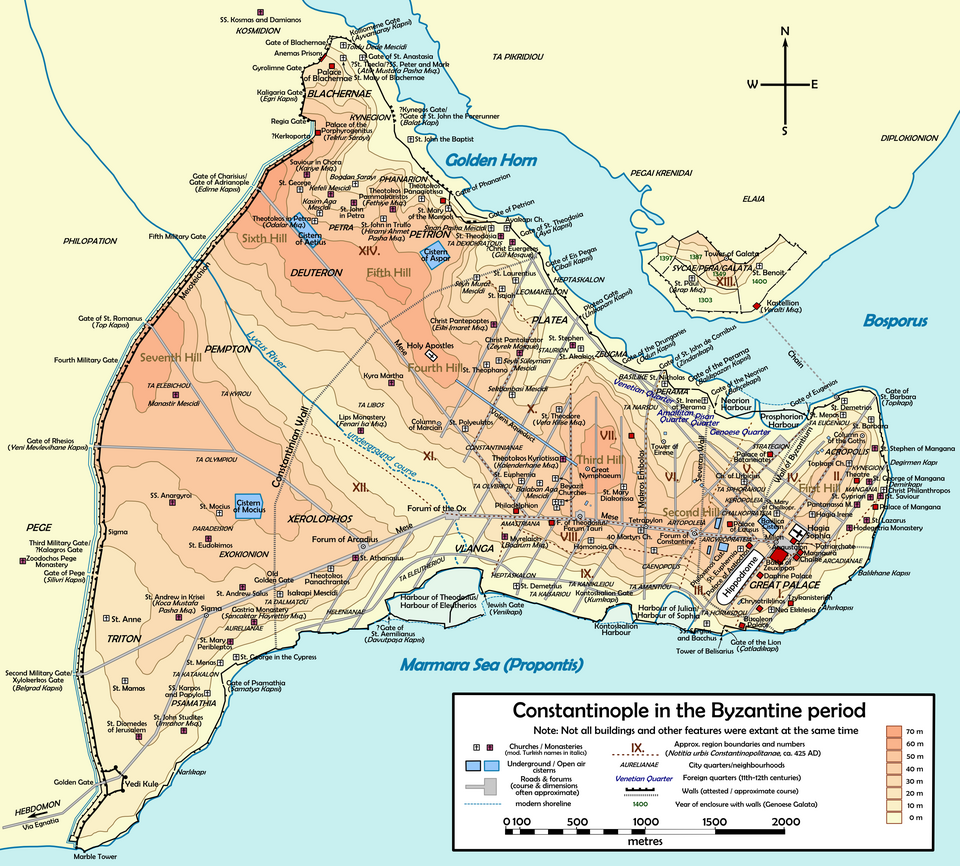
330 Image : Cplakidas · CC BY-SA 3.0 Society Founding of Constantinople Constantine moves the capital to the Bosporus. It will be the centre of the Byzantine Empire for over a thousand years.
Wikipedia ↗
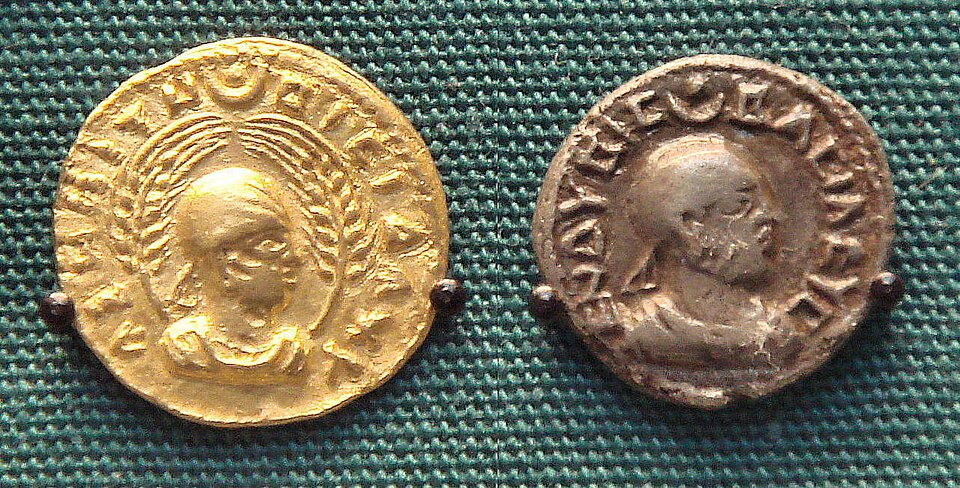
4th–5th century Image : PHGCOM · CC BY-SA 3.0 Society Aksum at its height The Ethiopian kingdom trades between the Mediterranean and India, mints coins and adopts Christianity.
Wikipedia ↗
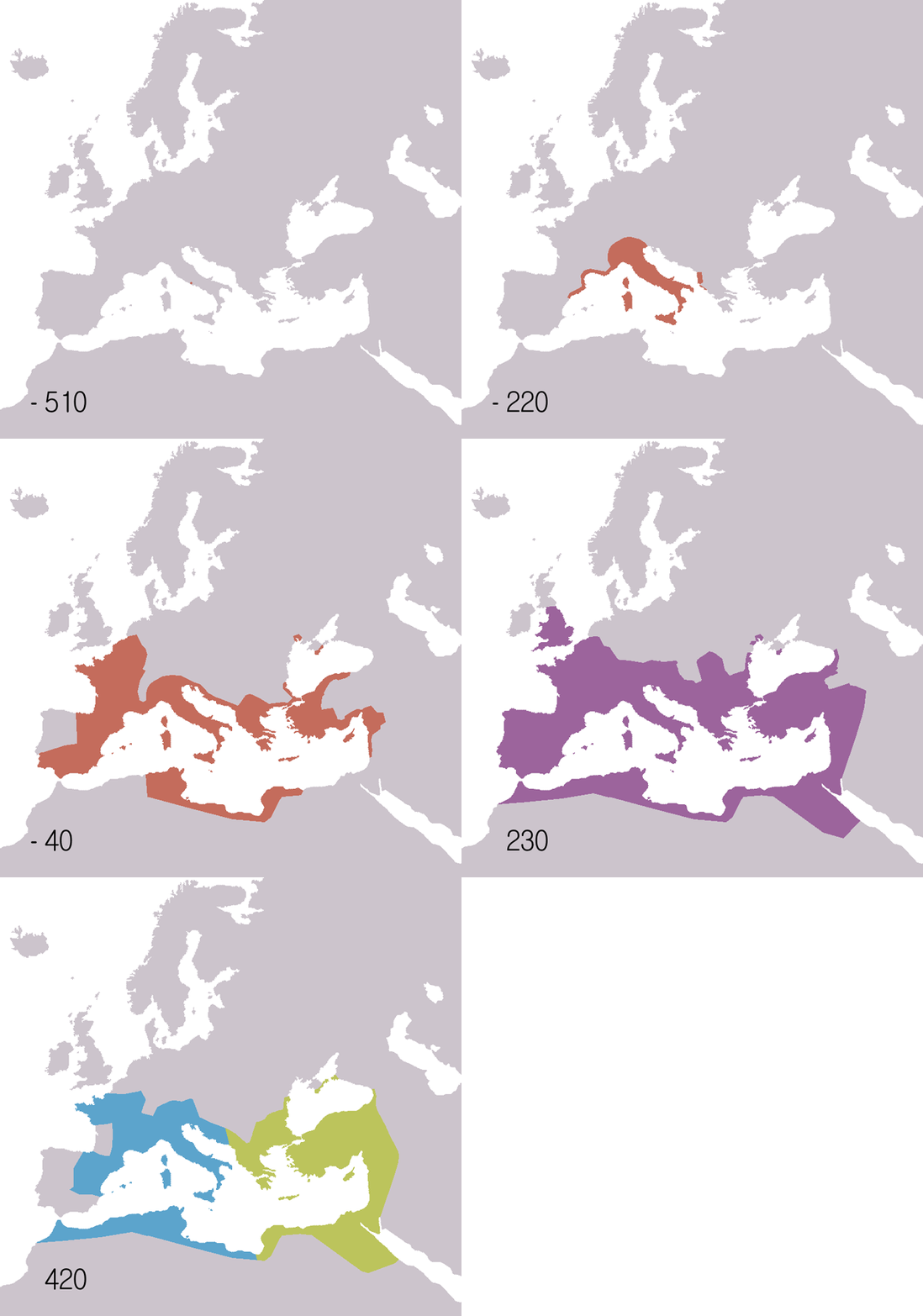
476 Image : Roke (d) · CC BY-SA 3.0 Society Fall of Rome in the West The Western Roman Empire ends; the Eastern one, Byzantium, continues.
Wikipedia ↗
Kingdoms and empires 500–1400 i 527–565 Society Reign of Justinian Byzantium tries to win back the western Mediterranean, compiles Roman law and builds Hagia Sophia.
Wikipedia ↗
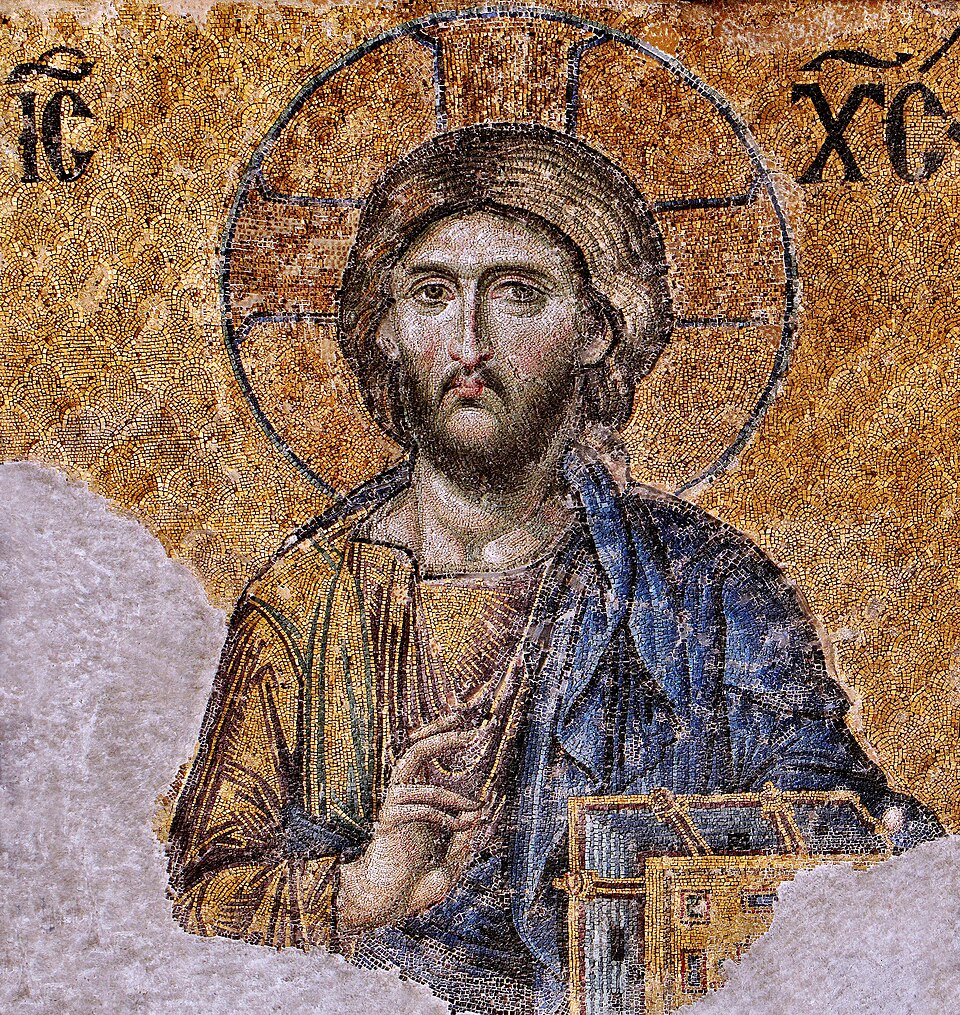
532–537 (Hagia Sophia) 6th century Glossary Icon A sacred image painted on panel in the Byzantine and Orthodox world. It is seen not as a painting but as a window onto the divine.
Painting · Wikipedia ↗ · historiadelarte.net ↗
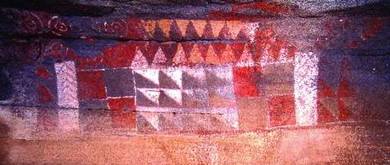
6th–15th century Image : Personal · Public domain Art Painted Cave of Gáldar (Gran Canaria) A chamber decorated with geometric paintings in red, white and black, in a pre-conquest Canarian village.
Painting · Wikipedia ↗
618–907 Society Tang dynasty China enjoys a cosmopolitan golden age: poetry, Buddhism and Chang’an as a great world city.
Wikipedia ↗
622 Society Islam is born Muhammad migrates to Medina; within a century Islam spreads from Iberia to Central Asia.
Wikipedia ↗
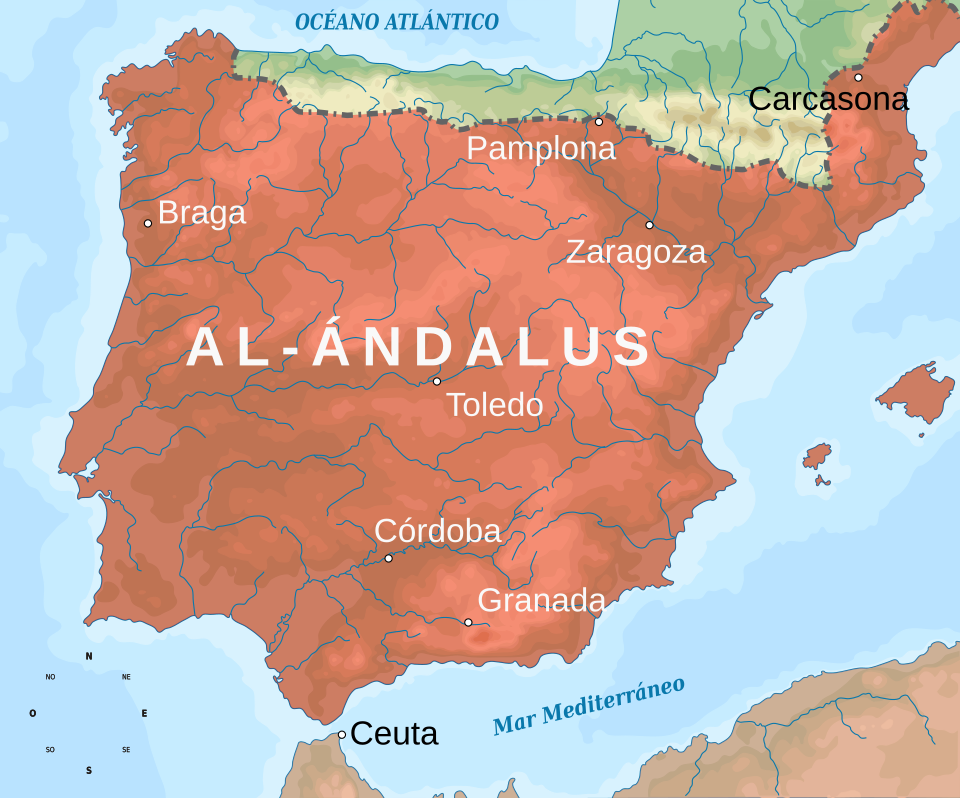
711 Image : Al-Andalus732.jpg:Q4767211492~commonswiki (talk · contribs) EmiratoDeCórdoba910.svg:rowanwindwhistler (talk · contribs) derivative work: rowanwindwhistler (talk) · CC0 Society Al-Andalus Almost eight centuries of Muslim presence in Iberia begin, a bridge of knowledge between East and Europe.
Wikipedia ↗
726–843 Glossary Iconoclasm Rejection and destruction of religious images. In Byzantium it divides the state for over a century; it returns in the Protestant Reformation.
Painting · Wikipedia ↗ · historiadelarte.net ↗
8th century (Islamic world); 12th century (Gothic) Glossary Pointed arch An arch of two curves meeting at a point. Umayyad and Abbasid architects use it before it reaches European Gothic.
Architecture · Wikipedia ↗ · historiadelarte.net ↗
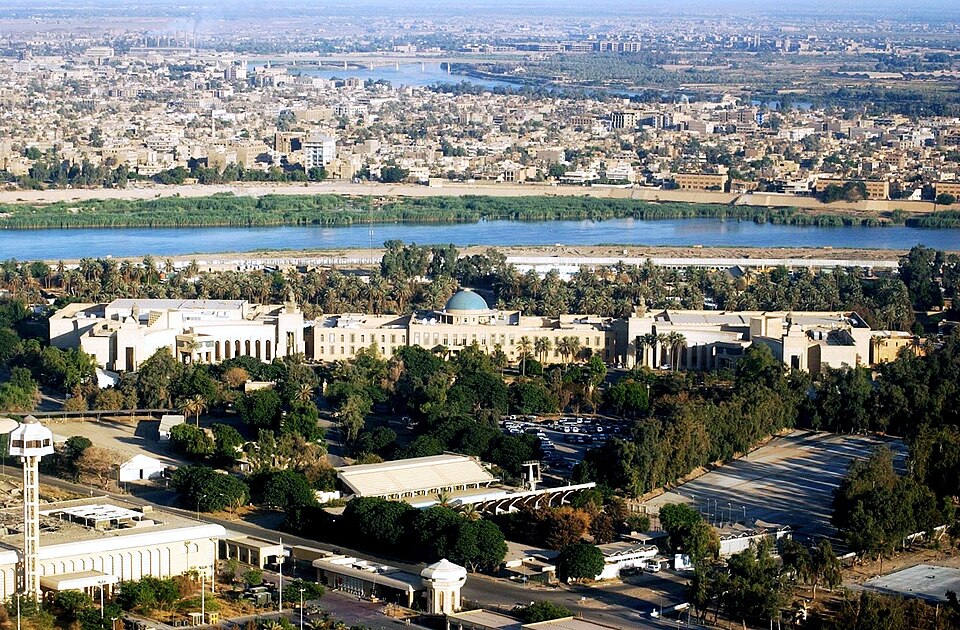
762 Image : USACE HQ , JIM GORDAN, CIV, USACE · Public domain Society Founding of Baghdad The Abbasid capital becomes a centre of science and translation of Greek, Persian and Indian texts.
Wikipedia ↗
c. 800 (Book of Kells) Glossary Manuscript illumination Hand decoration of books with paint and gold. European monasteries, Islamic calligraphers and Persian workshops make it a major art.
Painting · Drawing · Wikipedia ↗ · historiadelarte.net ↗
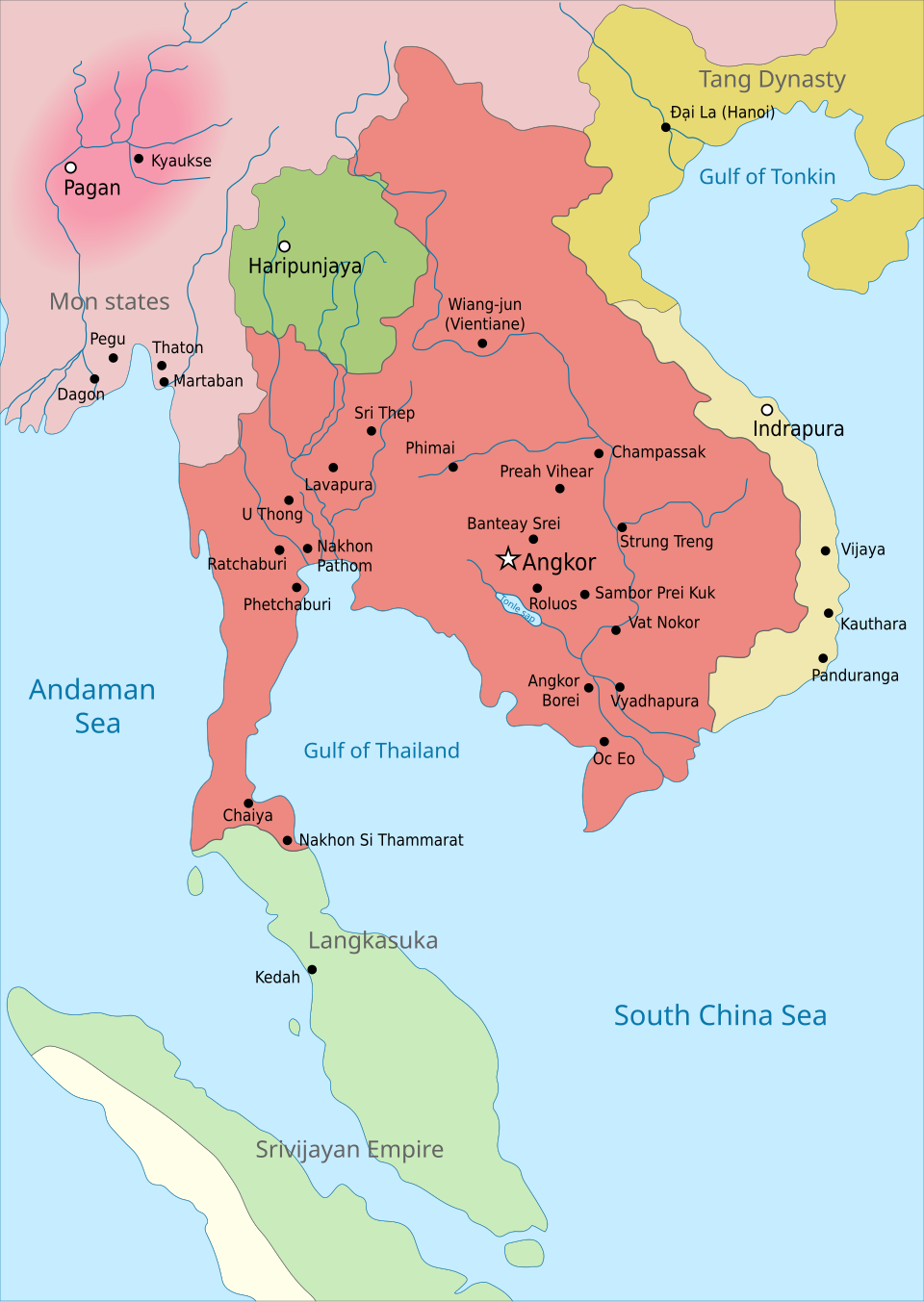
802–1431 Image : Jembezmamy · CC0 Society Khmer Empire and Angkor Khmer kings rule from Angkor, a vast city of temples and reservoirs.
Wikipedia ↗
868 (Diamond Sutra) Glossary Woodcut Wood engraving: the image is carved in relief, inked and printed. The oldest dated printed book is Chinese; centuries later it produces Japanese ukiyo-e.
Printmaking · Wikipedia ↗ · historiadelarte.net ↗
960–1279 Society Song dynasty Paper money, printing, the compass and big trading cities; landscape painting flourishes.
Wikipedia ↗
c. 1000–1200 Art Romanesque Thick-walled churches with round arches along the Way of St James; mural painting in flat colours.
Architecture · Sculpture · Painting · Wikipedia ↗
Key figures: Maestro de Taüll
10th–15th century Glossary Interlace (lacería) Decoration of crossing lines that form endless stars and polygons. Islamic art uses it to suggest the infinite without depicting figures.
Architecture · Painting · Wikipedia ↗ · historiadelarte.net ↗
1088 (Bologna) Society First European universities Bologna, Paris and Oxford organise the study of theology, law and medicine. Centres like al-Qarawiyyin in Fez existed earlier.
Wikipedia ↗
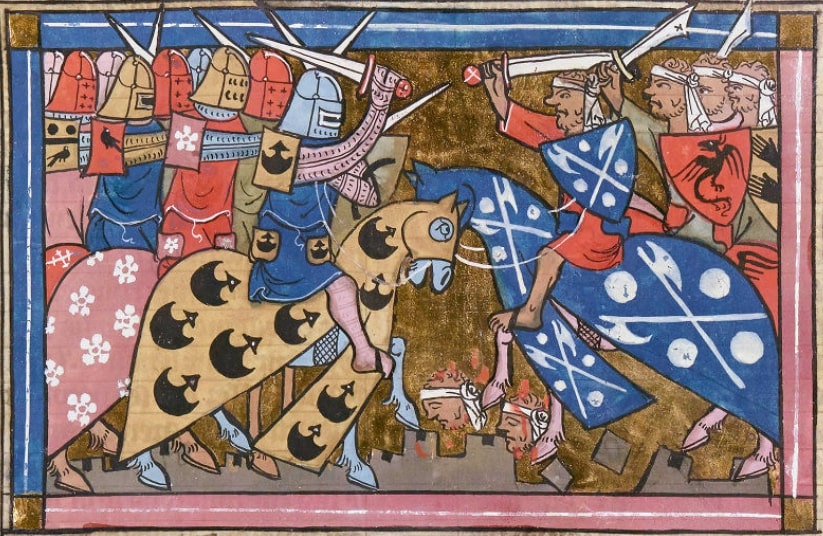
1095–1291 Image : anonymus · Public domain Society The Crusades Military expeditions from Latin Europe to the Holy Land. Jerusalem falls in 1099 and Saladin retakes it in 1187.
Wikipedia ↗
c. 1100–1450 Art Great Zimbabwe Dry-stone walls without mortar at the capital of a south-east African trading kingdom.
Architecture · Wikipedia ↗
c. 1140–1500 Art Gothic Tall, light-filled cathedrals with pointed arches, rib vaults and stained glass; cities and guilds grow.
Architecture · Sculpture · Painting · Wikipedia ↗
Key figures: Giotto , Jan van Eyck
c. 1140 (Saint-Denis) Glossary Rib vault A vault reinforced by crossing ribs that carry the weight to the piers. It allows thinner walls and large windows: the basis of Gothic.
Architecture · Wikipedia ↗ · historiadelarte.net ↗
c. 1200 (Chartres) Glossary Stained glass A window of coloured glass joined with lead. In Gothic art coloured light stands for God’s presence; rose windows are its most spectacular form.
Architecture · Painting · Wikipedia ↗ · historiadelarte.net ↗
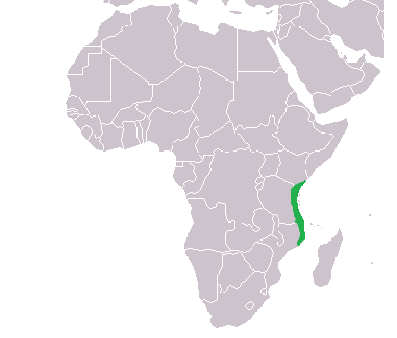
12th–15th century Image : Runehelmet · CC BY-SA 3.0 Society Indian Ocean trade Kilwa, Mombasa and other Swahili ports trade gold, ivory and textiles with Arabia, India and China.
Wikipedia ↗
1206 Society Mongol Empire Genghis Khan unites the Mongols; their empire, the largest land empire in history, connects Asia and Europe.
Wikipedia ↗
c. 1235 Society The Mali Empire is founded Sundiata Keita founds an empire that controls the Sahel gold trade; Timbuktu becomes a great centre of learning.
Wikipedia ↗
1258 Society The Mongols sack Baghdad The Abbasid caliphate ends; entire libraries are lost.
Wikipedia ↗
1274 and 1281 Society The Mongols fail in Japan Two Mongol fleets are repelled; the typhoons are remembered as kamikaze, “divine wind”.
Wikipedia ↗
14th–15th century Art Ife heads (Nigeria) Naturalistic portraits cast in copper alloy by Yoruba artists.
Metalwork · Sculpture · Wikipedia ↗
1325 Society Founding of Tenochtitlan The Mexica found their city on an island in Lake Texcoco; it becomes one of the largest in the world.
Wikipedia ↗
14th–16th century Society Timbuktu, city of learning Mosques and libraries make the Sahel city a centre of study and manuscript trade.
Wikipedia ↗
1347–1351 Society Black Death The pandemic arrives from Asia along trade routes and kills a third of Europe’s population.
Wikipedia ↗
1368 Society Ming dynasty China drives out the Mongols and enters a long period of stability, porcelain and great works.
Wikipedia ↗
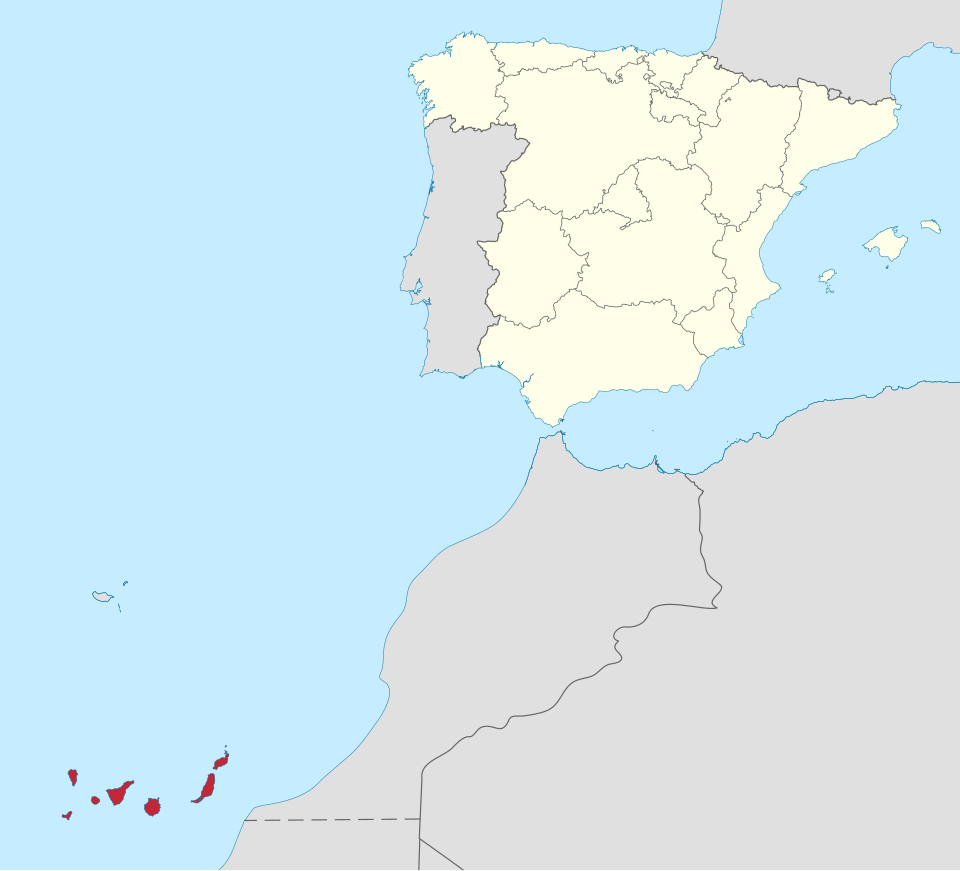
Conquest and colonialism 1400–1800 i 1402–1496 Image : TUBS · CC BY-SA 3.0 Society Conquest of the Canary Islands It begins with Béthencourt in Lanzarote and ends with the surrender of Tenerife. The islands are a rehearsal for Atlantic colonisation.
Wikipedia ↗
1405–1433 Society Voyages of Zheng He Great Chinese fleets reach Arabia and the East African coast, decades before the Portuguese.
Wikipedia ↗
c. 1415 (Brunelleschi) Glossary Linear perspective A geometric method for showing depth with lines converging on a vanishing point. China and Japan use other systems, such as parallel perspective.
Painting · Drawing · Wikipedia ↗ · historiadelarte.net ↗
c. 1420–1600 Art Renaissance Florence revives classical models; perspective, anatomy and the artist as intellectual, funded by bankers and popes.
Painting · Sculpture · Architecture · Wikipedia ↗
Key figures: Leonardo da Vinci , Miguel Ángel
1428 Society Aztec Triple Alliance Tenochtitlan, Texcoco and Tlacopan ally; Mexica power rises in central Mexico.
Wikipedia ↗
c. 1434 (Van Eyck) Glossary Oil paint Painting with pigments mixed in oil. The Flemish perfect it in the 15th century, though it was already used in the Bamiyan caves (Afghanistan) in the 7th century.
Painting · Wikipedia ↗ · historiadelarte.net ↗
1438 Society Pachacuti and Tawantinsuyu The Inca Pachacuti turns Cusco into the centre of an Andean empire linked by roads.
Wikipedia ↗
c. 1450 Art Machu Picchu (Peru) An Inca complex of tightly fitted mortarless stone, built into the mountain.
Architecture · Wikipedia ↗
15th century Glossary Humanism An intellectual movement that puts humans at the centre and revives Greek and Latin texts. It turns the artist into an intellectual.
Painting · Sculpture · Architecture · Wikipedia ↗ · historiadelarte.net ↗
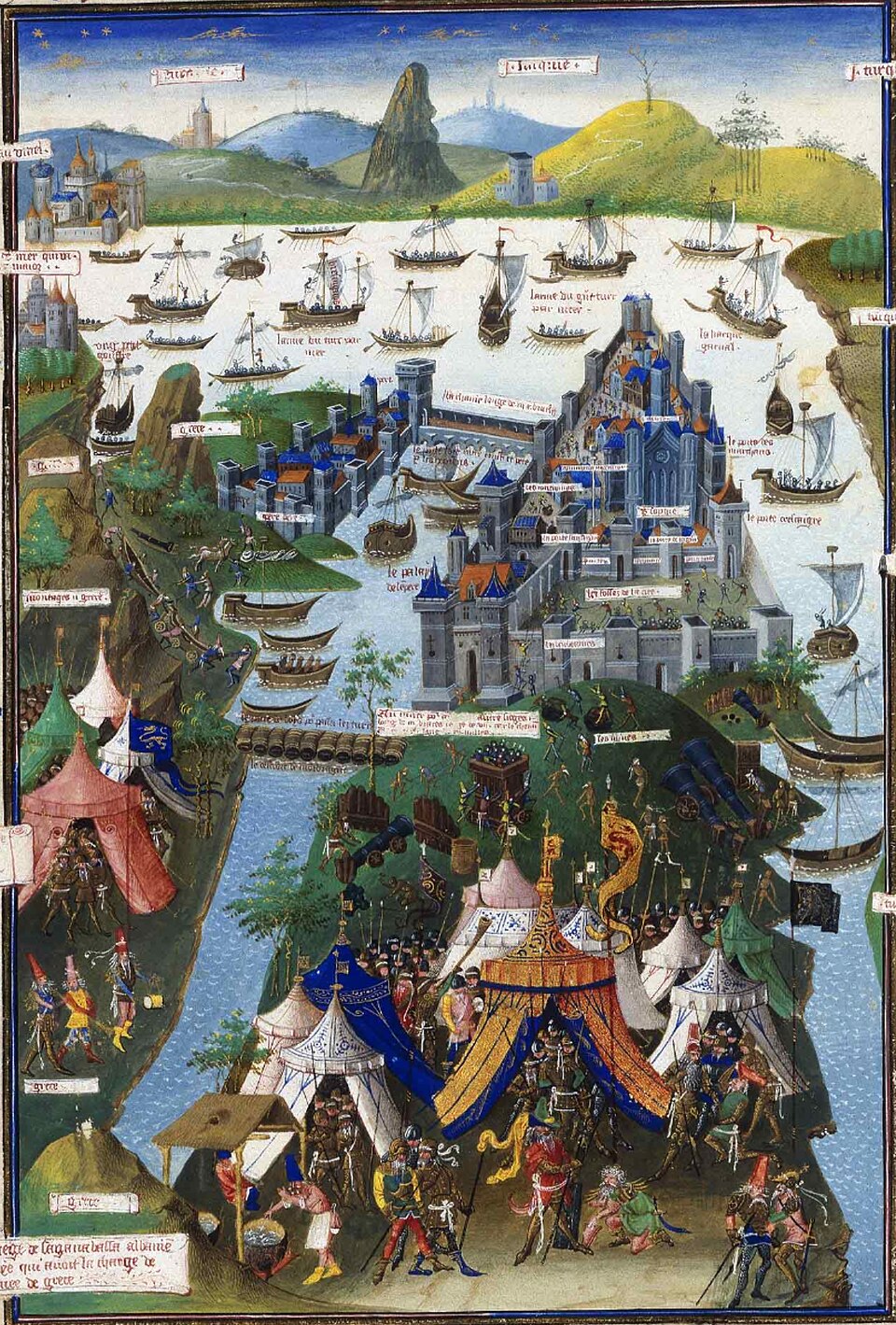
1453 Image : Autoría desconocida · Public domain Society Fall of Constantinople The Ottomans take the city and end the Byzantine Empire; Istanbul becomes their capital.
Wikipedia ↗
1455 (Gutenberg) Glossary Incunable A book printed before 1501. Gutenberg’s movable type has precedents in China and Korea, where the Jikji was printed in 1377 with metal type.
Printmaking · Design · Wikipedia ↗ · historiadelarte.net ↗
c. 1490 (Behzad, Herat) Glossary Miniature A small, detailed painting, mainly to illustrate books. In Persia, the Ottoman world and Mughal India it reaches extraordinary refinement.
Painting · Wikipedia ↗ · historiadelarte.net ↗
1492 Society End of the Kingdom of Granada Castile conquers the last Muslim kingdom in Iberia; the same year it expels the Jews.
Wikipedia ↗
1492 Society Columbus reaches the Caribbean The invasion of Abya Yala begins. War, epidemics and forced labour devastate Indigenous peoples.
Wikipedia ↗
1498 Society The Portuguese reach India Vasco da Gama sails round Africa to Calicut: Europe enters Indian Ocean trade.
Wikipedia ↗
16th–18th century Society Columbian exchange Plants, animals, people and diseases cross between continents: maize and potatoes reach Europe and smallpox the Americas.
Wikipedia ↗
16th–19th century Society Transatlantic slave trade More than twelve million African women and men are forcibly shipped to the Americas.
Wikipedia ↗
c. 1503 (Leonardo) Glossary Sfumato Leonardo da Vinci’s technique: contours blurred with very thin layers of paint, as if there were smoke between the figure and the viewer.
Painting · Wikipedia ↗ · historiadelarte.net ↗
1517 Society Protestant Reformation Luther breaks with Rome. Europe splits into religious wars and images in churches are questioned.
Wikipedia ↗
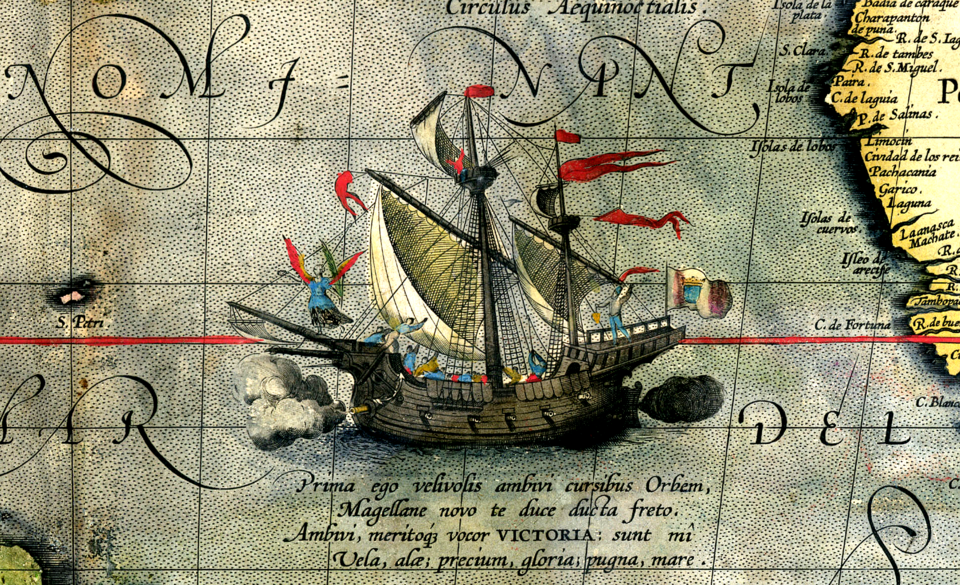
1519–1522 Image : Abraham Ortelius · Public domain Society First circumnavigation The Magellan–Elcano expedition sails round the planet.
Wikipedia ↗
c. 1520–1600 Art Mannerism Elongated figures, acid colours and tense compositions that break Renaissance balance.
Painting · Sculpture · Wikipedia ↗
Key figures: El Greco , Parmigianino
c. 1520–1600 Glossary Mannerism A style that exaggerates and twists Renaissance forms: elongated bodies, strange colours and unstable compositions.
Painting · Sculpture · Wikipedia ↗ · historiadelarte.net ↗
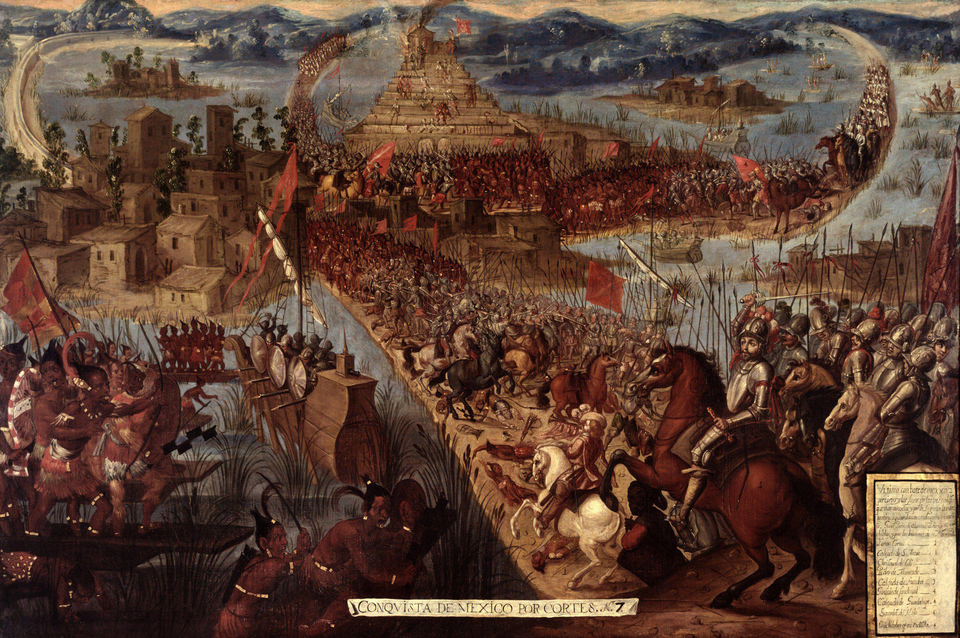
1521 Image : Unknown authorUnknown author · Public domain Society Fall of Tenochtitlan After a long siege, with Indigenous allies and smallpox, the Spanish take the Mexica capital.
Wikipedia ↗
1526 Society Mughal Empire Babur founds an empire that rules much of India until the 18th century.
Wikipedia ↗
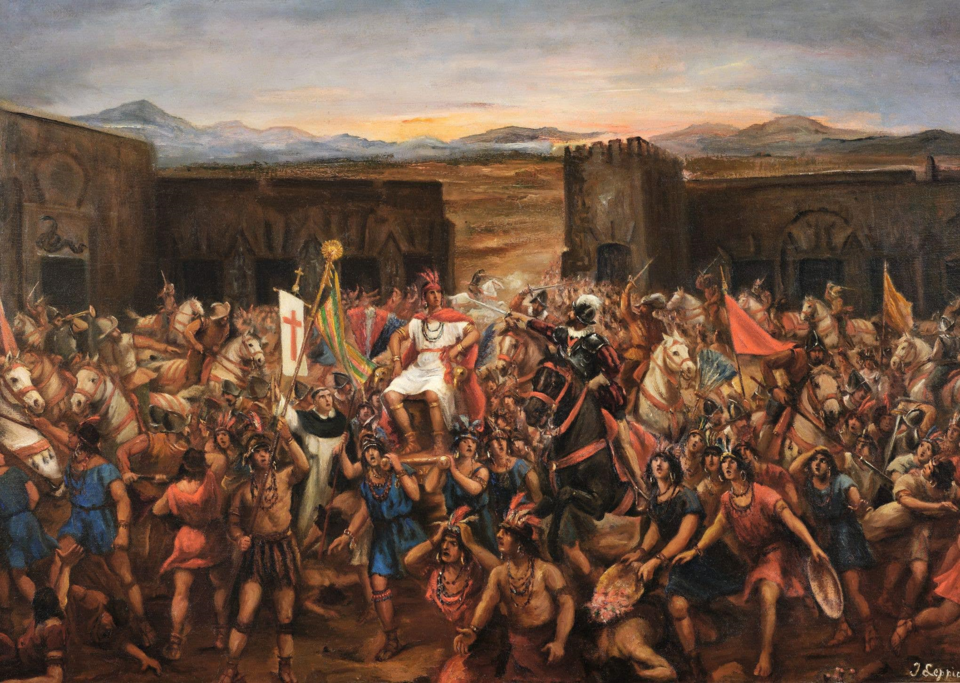
1532–1533 Image : Juan Lepiani · Public domain Society Conquest of Tawantinsuyu Pizarro captures Atahualpa at Cajamarca in the middle of an Inca civil war.
Wikipedia ↗
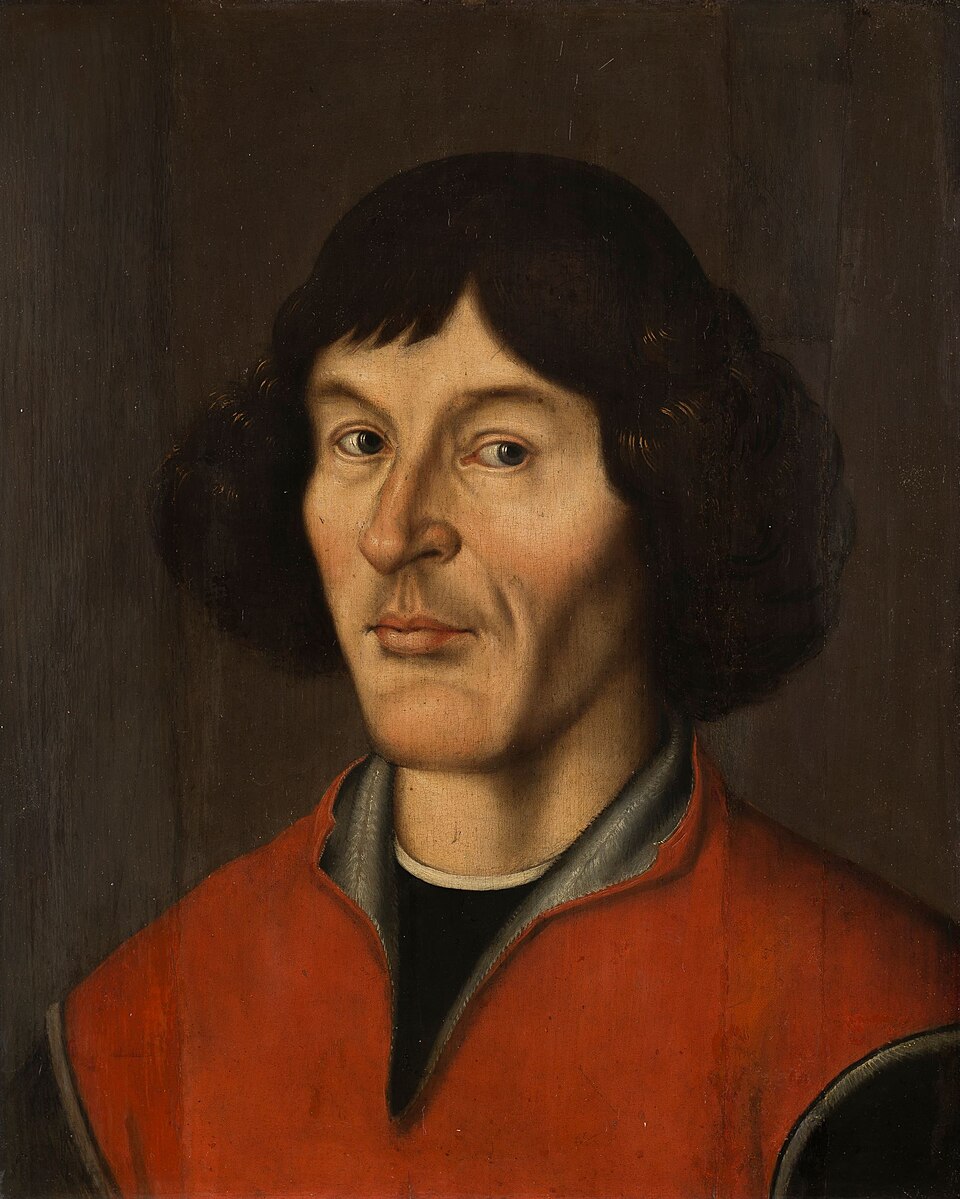
1543 Image : Unknown authorUnknown author · Public domain Society Copernicus: the Earth orbits the Sun The European scientific revolution begins, building on Islamic astronomy.
Wikipedia ↗
1545–1563 Society Council of Trent The Catholic Church answers the Reformation; art must be clear and moving: the Baroque is born.
Wikipedia ↗
16th century Art Bronze plaques of the Kingdom of Benin (Nigeria) Reliefs that covered the pillars of the oba's palace and told the history of the court.
Metalwork · Sculpture · Wikipedia ↗
15th–17th century Glossary Artesonado A wooden ceiling of joined pieces forming geometric patterns. Of Mudéjar origin, it reaches the Canaries and the Americas, with notable examples in churches of La Laguna and Teguise.
Architecture · Wikipedia ↗ · historiadelarte.net ↗
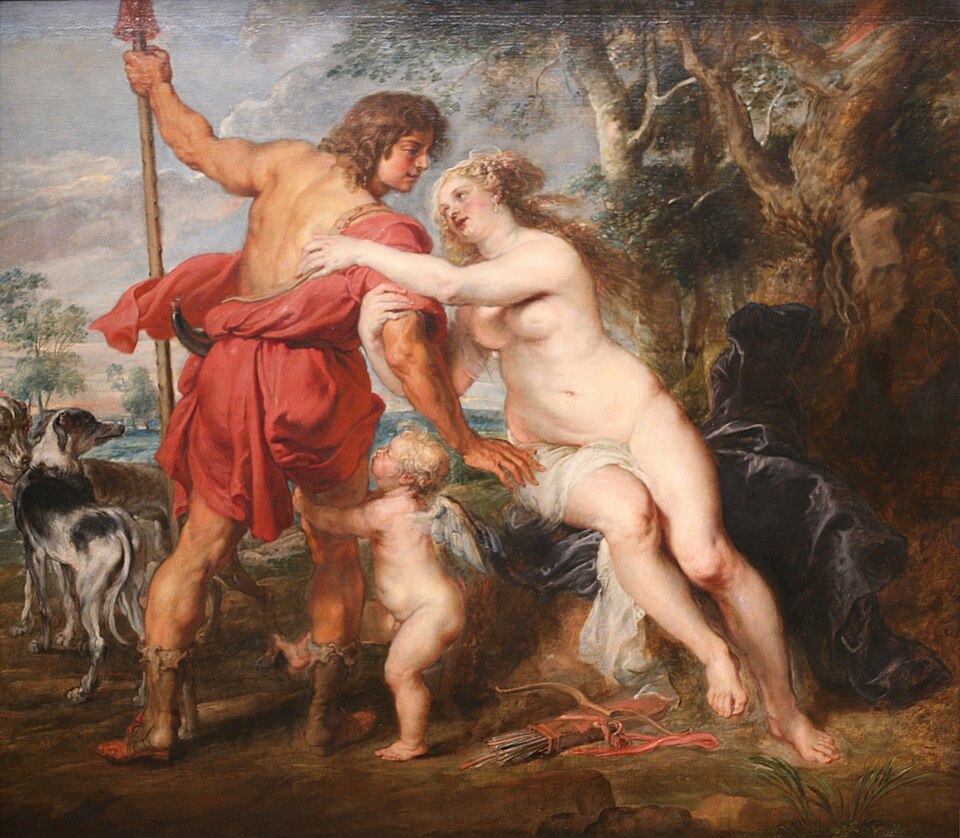
c. 1600–1750 Image : Peter Paul Rubens · Public domain Art Baroque Chiaroscuro, movement and emotion serving the Counter-Reformation and absolute monarchies, in the American colonies too.
Painting · Sculpture · Architecture · Wikipedia ↗
Key figures: Caravaggio , Diego Velázquez
c. 1600 (Caravaggio) Glossary Tenebrism A violent contrast between very dark areas and figures lit by a single beam. Caravaggio imposes it; Ribera and Zurbarán follow.
Painting · Wikipedia ↗ · historiadelarte.net ↗
1603 Society Tokugawa shogunate Japan enjoys two centuries of peace and isolation; cities and their popular culture grow.
Wikipedia ↗
1607 Society Founding of Jamestown The first lasting English colony in North America, on Powhatan land.
Wikipedia ↗
17th century Glossary Vanitas A still life reminding us life is short: skulls, snuffed candles, withered flowers. Very popular in Holland and Spain.
Painting · Wikipedia ↗ · historiadelarte.net ↗
1644 Society Qing dynasty The Manchus conquer China; it will be the last imperial dynasty.
Wikipedia ↗
17th century Glossary Genre scene A painting of the everyday life of ordinary people. It thrives in bourgeois Holland, where people buy pictures for their homes.
Painting · Wikipedia ↗ · historiadelarte.net ↗
c. 1730–1770 18th century Society The Enlightenment Reason, science and critique of power. The Encyclopédie appears from 1751.
Wikipedia ↗
1757 (Burke) Glossary Sublime The feeling before the immense or terrible, such as a storm or an abyss, which frightens and attracts at once. Key to Romanticism.
Painting · Wikipedia ↗ · historiadelarte.net ↗
c. 1760–1830 Art Neoclassicism A return to Greece and Rome, with clean lines and civic themes, alongside the Enlightenment and the French Revolution.
Painting · Sculpture · Architecture · Wikipedia ↗
Key figures: Jacques-Louis David , Antonio Canova
c. 1760–1830 Glossary Neoclassicism A return to Greco-Roman antiquity as a model of reason and civic virtue, after the finds at Pompeii. It is the style of the French Revolution.
Painting · Sculpture · Architecture · Wikipedia ↗ · historiadelarte.net ↗
c. 1760 Society Industrial Revolution The steam engine and the factory transform work, first in Britain, then worldwide.
Wikipedia ↗
1776 Society US independence The thirteen colonies break from Britain, while keeping slavery.
Wikipedia ↗
1789 Society French Revolution The Ancien Régime falls; the rights of man and of the citizen are proclaimed.
Wikipedia ↗
1796 (Senefelder) Glossary Lithography A printing technique on stone that repels or holds ink according to the drawing. It makes printed images cheap and fills cities with posters.
Printmaking · Wikipedia ↗ · historiadelarte.net ↗
Revolutions and colonial empires 1800–1900 i c. 1800–1850 c. 1800–1850 Glossary Romanticism It puts emotion, the individual and wild nature above reason. The idea of the artist as misunderstood genius is born.
Painting · Wikipedia ↗ · historiadelarte.net ↗
1804 Society Independence of Haiti The revolution of enslaved people founds the first free Black republic.
Wikipedia ↗
1810–1825 Society Spanish American independence Spain’s mainland colonies become republics, led by Creole elites.
Wikipedia ↗
1830 Society First modern railway The Liverpool–Manchester line changes the sense of distance and time.
Wikipedia ↗
c. 1831 Art The Great Wave off Kanagawa (Hokusai, Japan) Woodblock print from the series Thirty-six Views of Mount Fuji. It will go on to influence European art.
Printmaking · Wikipedia ↗
1839–1860 Society Opium Wars Britain forces China to accept the opium trade; the “century of humiliation” begins.
Wikipedia ↗
c. 1848–1880 1848 Society Revolutions of 1848 Liberal, national and workers’ uprisings across Europe; the Communist Manifesto is published.
Wikipedia ↗
c. 1850 Glossary Realism Painting what one sees, including the life of peasants and workers, without idealising. Courbet makes it a political stance.
Painting · Wikipedia ↗ · historiadelarte.net ↗
1857 Society Indian Rebellion of 1857 A great uprising against the East India Company; afterwards India is ruled by the Crown.
Wikipedia ↗
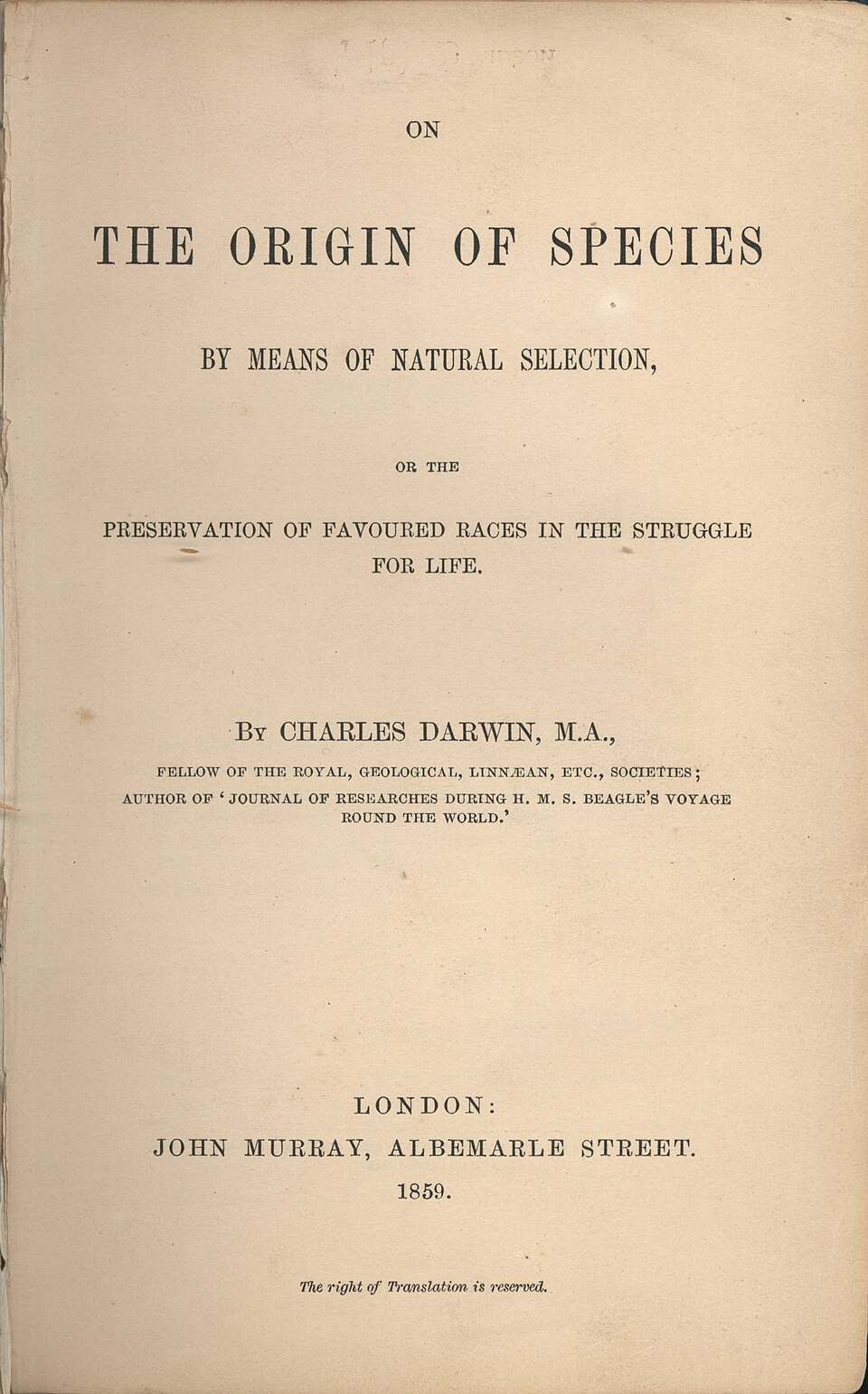
1859 Image : John Murray, Publisher · Public domain Society Darwin: On the Origin of Species The theory of evolution by natural selection changes how life is understood.
Wikipedia ↗
1861–1865 Society American Civil War The United States fights over slavery; at the end it is abolished nationwide.
Wikipedia ↗
1868 Society Meiji Restoration Japan opens up and modernises at speed to avoid being colonised.
Wikipedia ↗
1869 Society Suez Canal It links the Mediterranean and the Red Sea, speeding up trade and colonisation.
Wikipedia ↗
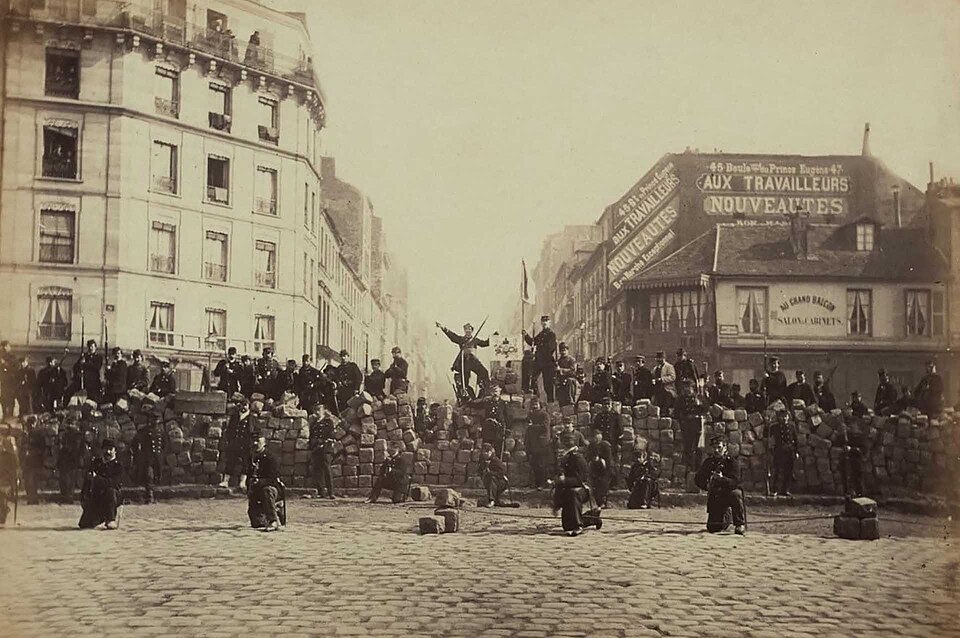
1871 Image : Autoría desconocida · Public domain Society Paris Commune For two months Paris governs itself; Courbet takes part and the repression is brutal.
Wikipedia ↗
1874 (first exhibition) Art Impressionism Open-air painting that captures light and the moment; it is also shaped by Japanese prints.
Painting · Wikipedia ↗
Key figures: Claude Monet , Berthe Morisot
To watch
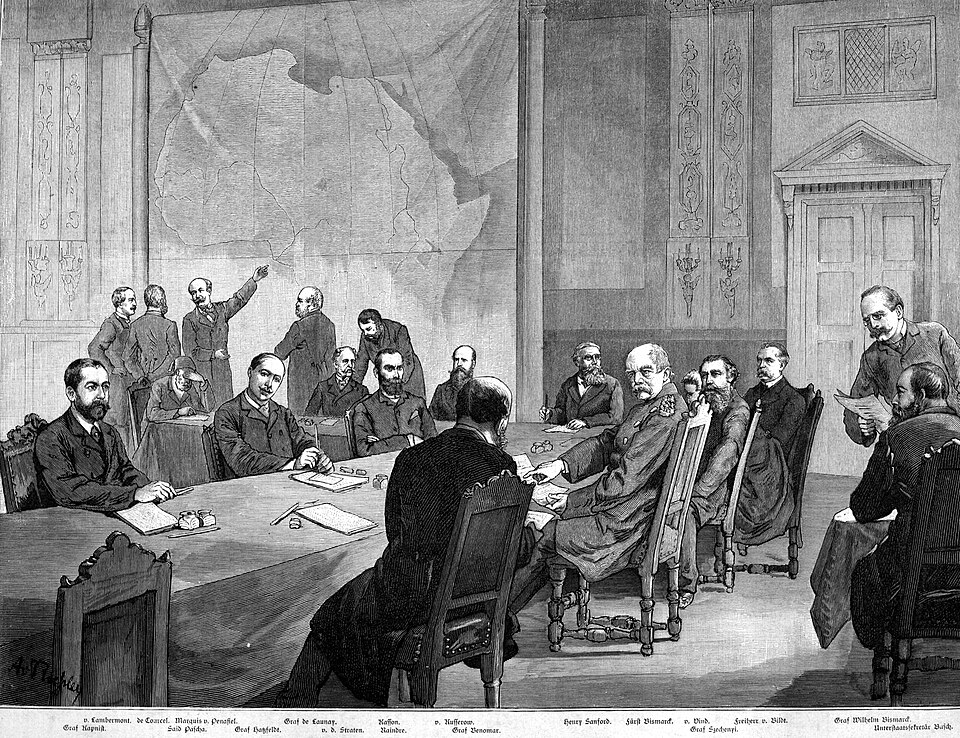
Renoir (film, 2012, Gilles Bourdos) 1884–1885 Image : Adalbert von Roessler · Public domain Society Berlin Conference European powers divide Africa among themselves with no African voice at the table.
Wikipedia ↗
c. 1886–1905 1886 (Seurat) Glossary Pointillism Painting with small dots of pure colour that the eye blends. It draws on the colour science of its day.
Painting · Wikipedia ↗ · historiadelarte.net ↗
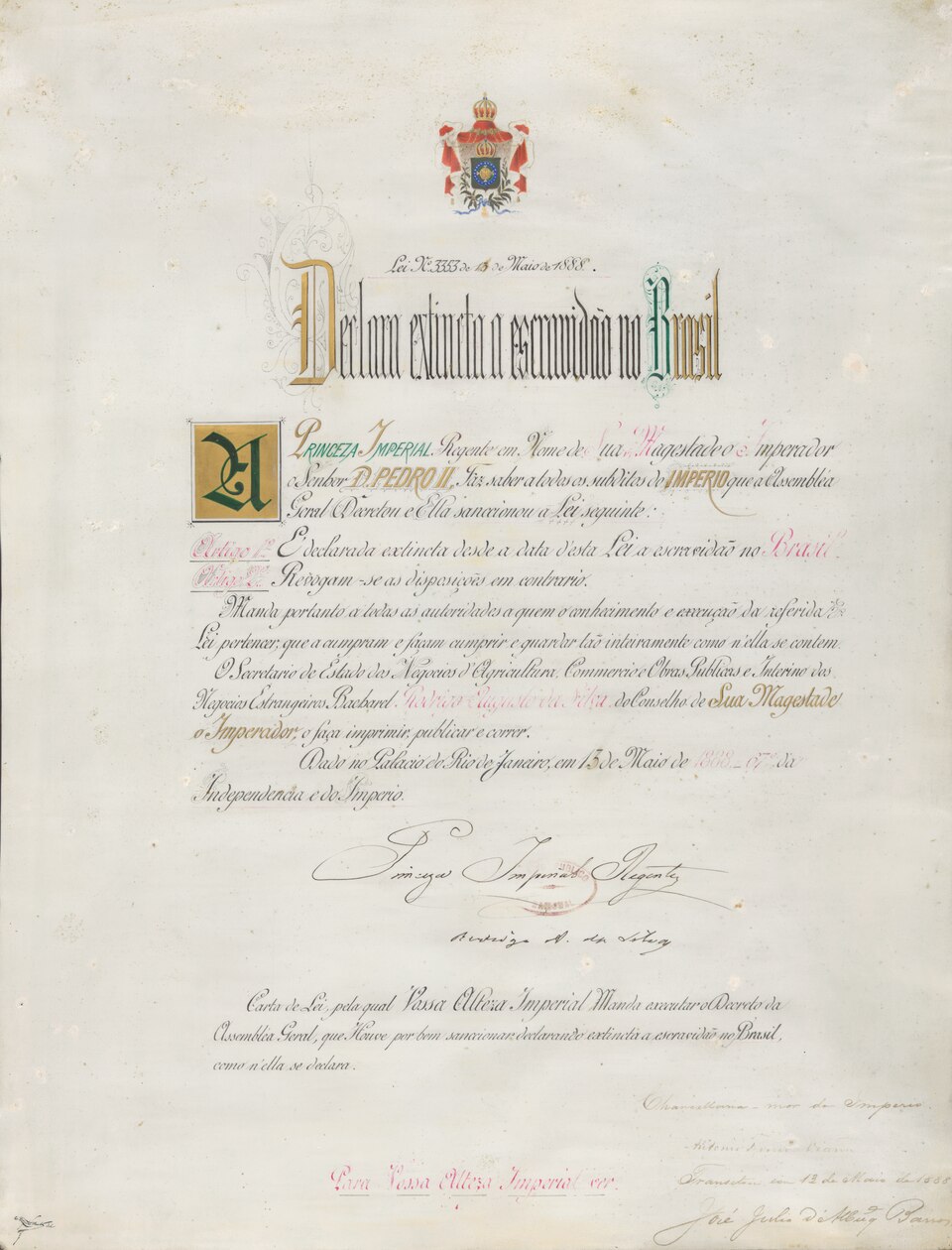
1886 1888 Image : Senado Imperial · Public domain Society Abolition of slavery in Brazil Brazil is the last country in the Americas to abolish slavery.
Wikipedia ↗
c. 1890–1910 Art Art Nouveau / Modernisme Organic forms inspired by nature, uniting architecture, decorative arts and design.
Architecture · Design · Wikipedia ↗
Key figures: Antoni Gaudí , Alfons Mucha
1890–1914 Society Great transatlantic migrations Millions of Europeans, Canary Islanders among them, emigrate to the Americas: Cuba, Venezuela, Argentina, the USA.
Wikipedia ↗
1894–1895 Society Sino-Japanese War Japan defeats China and takes Taiwan: its colonial empire begins.
Wikipedia ↗
1897 Society Looting of Benin British troops raze Benin City and carry off thousands of works still held in European museums today.
Wikipedia ↗
1899–1902 Society Boer War Britain prevails in South Africa using concentration camps.
Wikipedia ↗
Avant-gardes and the Great War 1900–1918 i c. 1905 1905 (Die Brücke) 1905 1905 Glossary Fauvism Pure, violent colour that does not imitate reality. Critics call Matisse and Derain “wild beasts”.
Painting · Wikipedia ↗ · historiadelarte.net ↗
1905 Glossary Expressionism Distorting form and colour to express anguish and inner emotion. It revives the woodcut as a direct language.
Painting · Printmaking · Wikipedia ↗ · historiadelarte.net ↗
1904–1905 Society Russo-Japanese War Japan defeats Russia: for the first time an Asian country beats a modern European power.
Wikipedia ↗
1907 Art Cubism It breaks single-point perspective and splits objects into planes; it draws on African sculpture, which reaches Paris through colonialism.
Painting · Sculpture · Wikipedia ↗
Key figures: Pablo Picasso , Georges Braque
1909 (manifesto) 1909 Glossary Futurism It exalts the machine, speed and war and wants to destroy museums. Several members end up supporting Fascism.
Painting · Sculpture · Wikipedia ↗ · historiadelarte.net ↗
1910–1920 Society Mexican Revolution Peasants and Indigenous peoples rise up for land with Zapata and Villa.
Wikipedia ↗
c. 1906–1911 Glossary Abstraction Art that represents no recognisable objects, only shape, line and colour. Often credited to Kandinsky, though Hilma af Klint painted this way in 1906.
Painting · Wikipedia ↗ · historiadelarte.net ↗
1914–1918 Society First World War Millions die in Europe; the powers also mobilise soldiers from Africa and Asia.
Wikipedia ↗
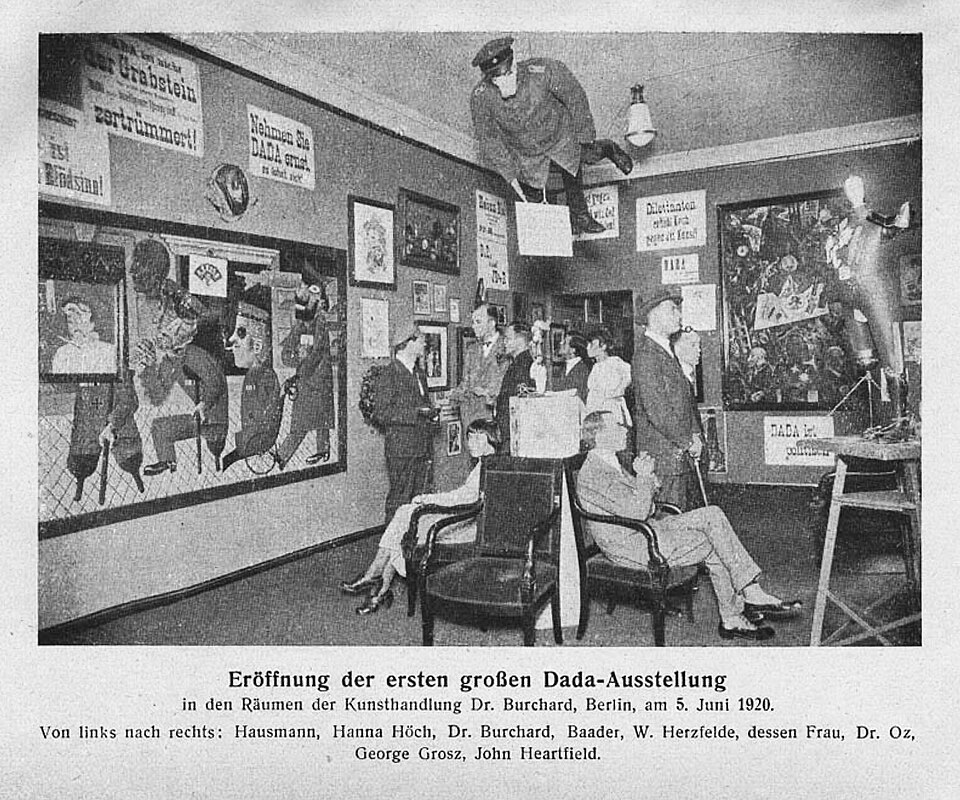
c. 1915–1930 1916 (Cabaret Voltaire, Zurich) Image : Unknown authorUnknown author · Public domain Art Dada Anti-art born in the middle of the First World War: chance, collage, readymades and performance.
Live arts · Installation · Wikipedia ↗
Key figures: Marcel Duchamp , Hannah Höch
1917 Society Russian Revolution Tsarism falls and the first socialist state is born.
Wikipedia ↗
Interwar years and the Second World War 1918–1945 i 1918 Art Luján Pérez School (Gran Canaria) A free art school in Las Palmas that drives Canarian indigenismo: the islands’ landscape, people and Aboriginal culture.
Painting · Sculpture · Wikipedia ↗
Key figures: Felo Monzón , Plácido Fleitas
1918–1920 Society 1918 flu pandemic It kills tens of millions worldwide, more than the war.
Wikipedia ↗
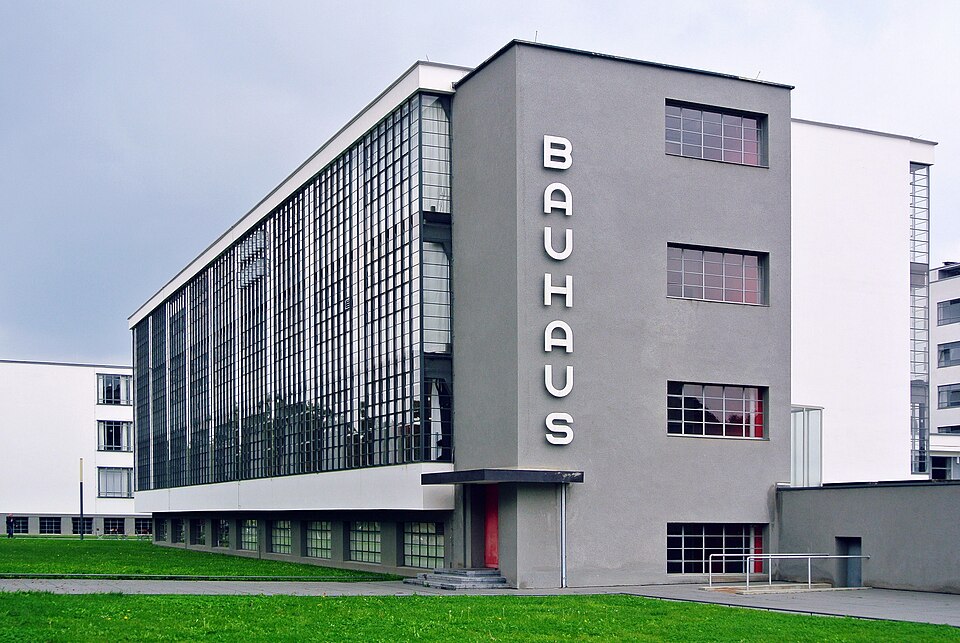
1919–1933 Image : Spyrosdrakopoulos · CC BY-SA 4.0 Art Bauhaus A German school uniting art, craft and industry; the Nazis close it in 1933.
Design · Architecture · Wikipedia ↗
Key figures: Walter Gropius , Anni Albers
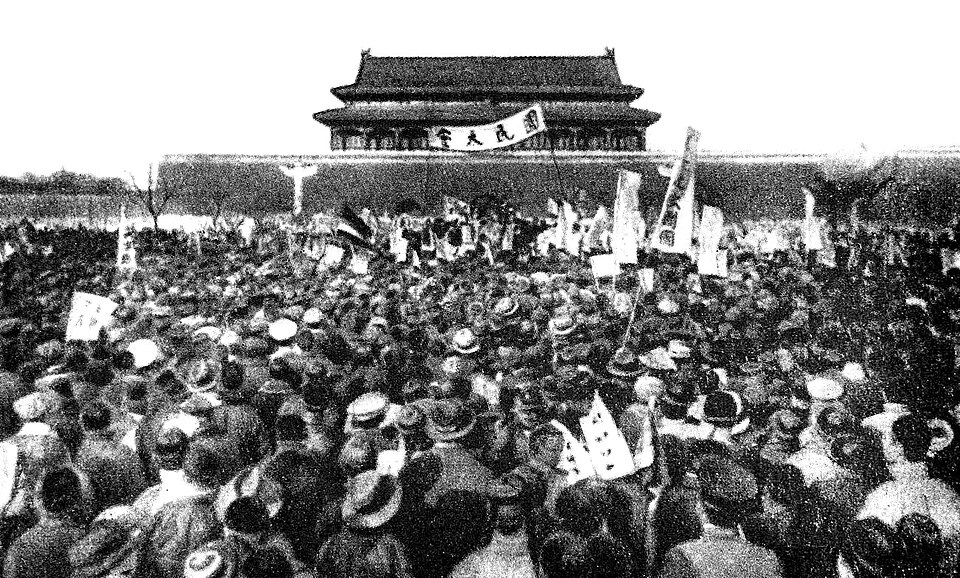
1919 Image : Unknown authorUnknown author · Public domain Society May Fourth Movement Chinese students protest against the Treaty of Versailles and call for science, democracy and a new culture.
Wikipedia ↗
1920s Art Harlem Renaissance An African American cultural explosion in New York that affirms Black identity and its African roots.
Painting · Sculpture · Photography · Wikipedia ↗
Key figures: Aaron Douglas , Augusta Savage
1922 Art Mexican muralism Rivera, Orozco and Siqueiros paint public walls to tell history from the people and Indigenous roots.
Painting · Wikipedia ↗
To watch
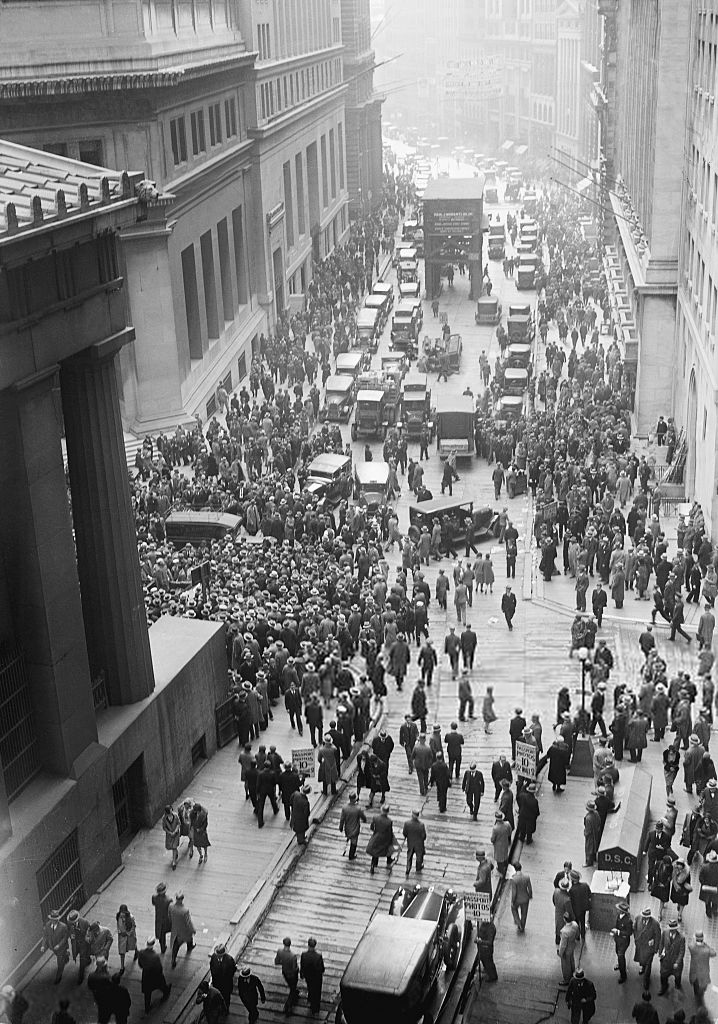
Frida (film, 2002, Julie Taymor) 1924 (manifesto) 1928 1929 Image : US-gov · Public domain Society Wall Street Crash The New York stock market crash opens the Great Depression worldwide.
Wikipedia ↗
1935 Art School of the South (Uruguay) Torres García calls for looking from the south: “our north is the south”. In 1943 he draws the inverted map of America.
Painting · Wikipedia ↗
Key figures: Joaquín Torres García
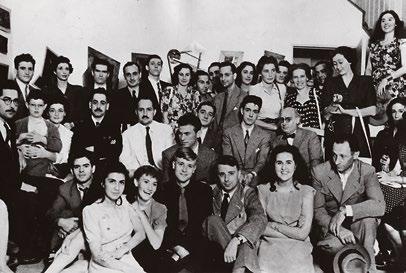
1935 Art Surrealist exhibition in Tenerife Organised by Gaceta de Arte at the Ateneo in Santa Cruz; André Breton and Benjamin Péret travel there. Óscar Domínguez is among the artists.
Painting · Wikipedia ↗
1936 Society Military coup and civil war Franco leaves Gran Canaria on 18 July to take command of the troops in Morocco.
Wikipedia ↗
1937 Art Guernica (Picasso) A response to the bombing of the Basque town by Nazi and Fascist Italian aircraft.
Painting · Wikipedia ↗
To watch
Guernica (short film, 1950, Alain Resnais) 1939–1945 Society Second World War The deadliest war in history, with the Holocaust and fronts in Europe, Asia and Africa.
Wikipedia ↗
c. 1943–1960 Art Abstract Expressionism Large canvases of gesture and colour in New York, which becomes the new capital of the art market.
Painting · Wikipedia ↗
Key figures: Jackson Pollock , Lee Krasner
1943 Art The Jungle (Wifredo Lam, Cuba) Lam blends the avant-garde with Afro-Cuban spirituality in a key work of Caribbean art.
Painting · Wikipedia ↗
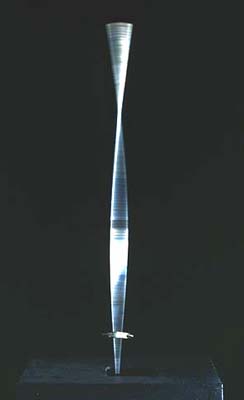
Post-war and decolonisation 1945–1968 i 1945 Image : Grete Stern · Public domain Art Arte Concreto-Invención (Argentina) River Plate geometric abstraction: irregular frames, moving works and art as invention rather than copy.
Painting · Sculpture · Wikipedia ↗
Key figures: Tomás Maldonado , Gyula Kosice
1945 Society Hiroshima and Nagasaki The US drops two atomic bombs on Japan.
Wikipedia ↗
1945 Society The UN is founded Fifty countries sign the UN Charter in San Francisco.
Wikipedia ↗
1947 Art Bombay Progressive Artists’ Group Founded in the year of independence to create a modern Indian art, free from colonial academicism.
Painting · Wikipedia ↗
Key figures: F. N. Souza , M. F. Husain
1947 Society Independence and Partition of India British rule ends; the division into India and Pakistan displaces millions.
Wikipedia ↗
1948 Society Universal Declaration of Human Rights Adopted in Paris, it becomes the world’s reference for rights.
Wikipedia ↗
1949 Society Chinese Revolution The People’s Republic of China is proclaimed.
Wikipedia ↗
1954 Art Gutai (Japan) In post-war Japan, the body and action do the painting: mud, feet, torn paper. It anticipates performance art.
Live arts · Painting · Wikipedia ↗
Key figures: Jirō Yoshihara , Kazuo Shiraga
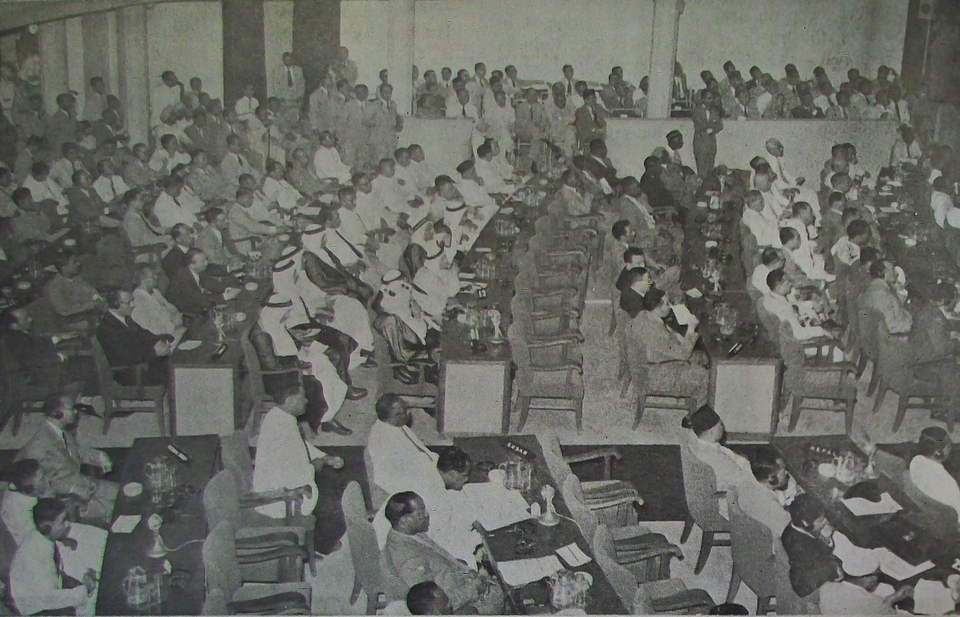
1955 1955 Image : Foreign Ministry of the Republic of Indonesia · Public domain Society Bandung Conference (Indonesia) Asian and African countries meet against colonialism and outside the two Cold War blocs.
Wikipedia ↗
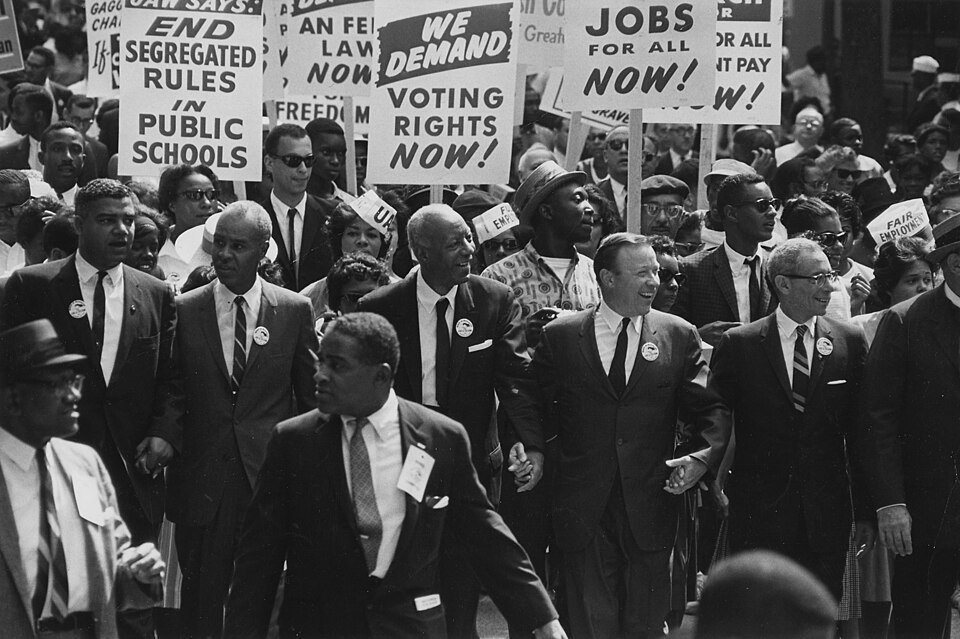
1955–1968 Image : Rowland Scherman · Public domain Society Civil rights movement From the Montgomery bus boycott on, African Americans fight racial segregation.
Wikipedia ↗
1955–1975 Society Vietnam War The war against the United States sparks protests worldwide and ends with the country’s reunification.
Wikipedia ↗
1957 (El Paso group) 1958 Art Zaria Art Society (Nigeria) Nigerian students propose a “natural synthesis” of local traditions and modernity, on the eve of independence.
Painting · Printmaking · Wikipedia ↗
Key figures: Uche Okeke , Bruce Onobrakpeya
1959 Art Neo-Concretism (Brazil) Works to touch, wear and handle: the audience stops looking and starts taking part.
Sculpture · Installation · Wikipedia ↗
Key figures: Lygia Clark , Hélio Oiticica
1959 Society Cuban Revolution The revolution triumphs in Cuba, in the middle of the Cold War.
Wikipedia ↗
1950s–1960s Art Studio portraiture in Bamako (Mali) Malian photographers portray urban youth enjoying newly won independence, fashion and music.
Photography · Wikipedia ↗
Key figures: Seydou Keïta , Malick Sidibé
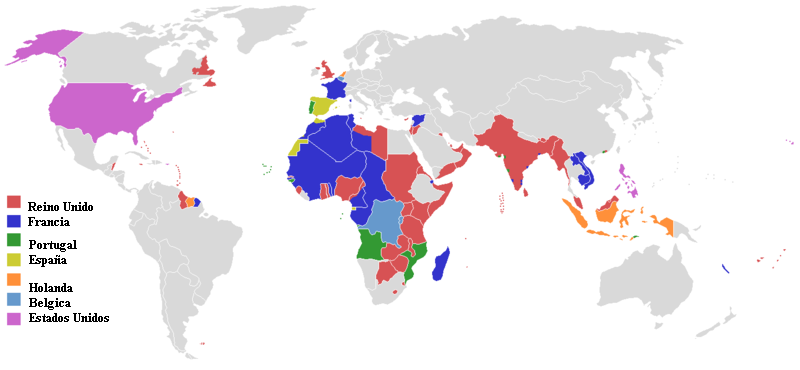
1960 Image : Penarc · CC BY-SA 3.0 Society The Year of Africa Seventeen African countries become independent in a single year.
Wikipedia ↗
1960s Society Mass tourism reaches the Canary Islands Charter flights and coastal resorts transform the islands’ economy and land.
Wikipedia ↗
1962 Art Fluxus An international network mixing music, action and everyday life; art as process rather than object.
Live arts · Installation · Wikipedia ↗
Key figures: Joseph Beuys , Yoko Ono
c. 1956–1970 Art Pop art Born in Britain, it explodes in New York: advertising, comics and consumer goods turned into art.
Painting · Printmaking · Wikipedia ↗
Key figures: Andy Warhol , Marisol
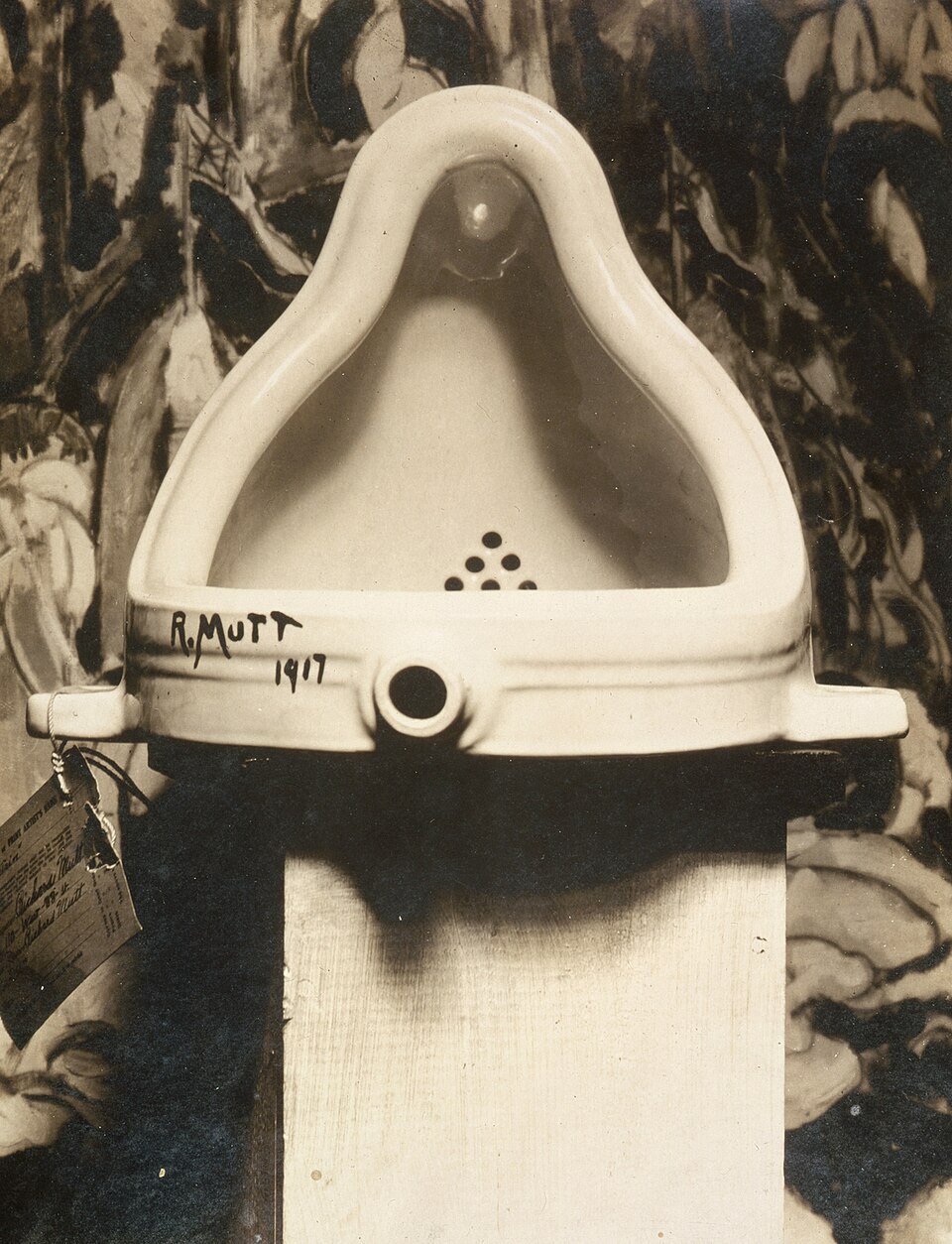
c. 1965 Image : Marcel Duchamp / Alfred Stieglitz · Public domain Art Conceptual art The idea matters more than the object: texts, instructions and documents become the work.
Installation · Wikipedia ↗
Key figures: Joseph Kosuth , Sol LeWitt
c. 1965 1965 Art Video art With the first portable cameras, artists such as Nam June Paik turn television into an artistic material.
Video and film · Wikipedia ↗
Key figures: Nam June Paik , Joan Jonas
1966 Art World Festival of Black Arts (Dakar) Senghor gathers artists from Africa and the diaspora to affirm Black cultures.
Live arts · Sculpture · Painting · Wikipedia ↗
1966 Art Narcissus Garden (Yayoi Kusama) Uninvited, Kusama fills a lawn at the Venice Biennale with mirrored spheres and sells them for two dollars each.
Installation · Live arts · Wikipedia ↗
1967 1967 Art Tropicália (Brazil) An installation by Oiticica that names an art and music movement against the dictatorship and for a mixed culture.
Installation · Live arts · Wikipedia ↗
Key figures: Hélio Oiticica , Caetano Veloso
Countercultures and dictatorships 1968–1989 i 1968 Art Mono-ha (Japan) “School of things”: stone, earth, wood and steel placed with minimal intervention, to think about materials and space.
Sculpture · Installation · Wikipedia ↗
Key figures: Lee Ufan , Nobuo Sekine
1968 Art Tucumán Arde (Argentina) Artists investigate and denounce sugar-mill closures and hunger under the dictatorship: art as political action.
Installation · Wikipedia ↗
Key figures: Graciela Carnevale , Roberto Jacoby
1968 Society Tlatelolco massacre The Mexican army fires on students in Mexico City, ten days before the Olympic Games.
Wikipedia ↗
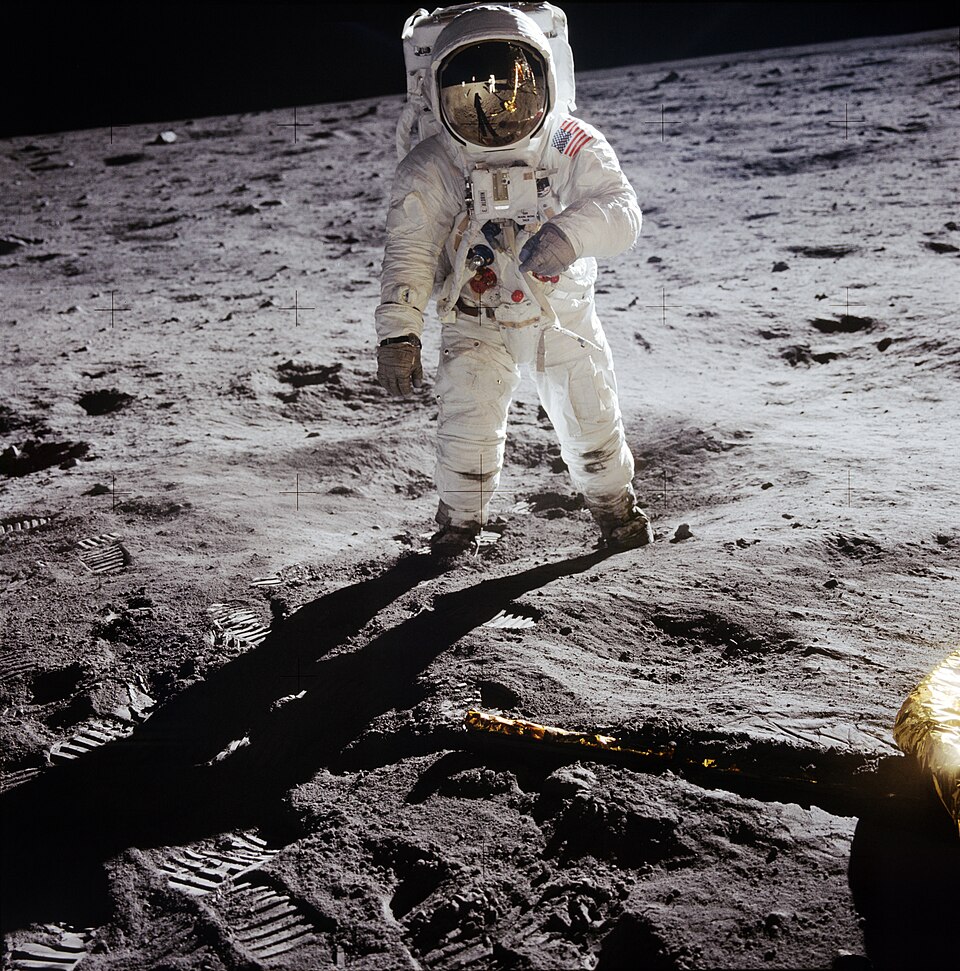
1957–1969 Image : Neil A. Armstrong · Public domain Society From Sputnik to the Moon The USSR launches Sputnik in 1957; in 1969 two astronauts walk on the Moon.
Wikipedia ↗
1970 Art Land art The work leaves the museum and is made with the land itself, like Smithson’s Spiral Jetty.
Sculpture · Installation · Wikipedia ↗
Key figures: Robert Smithson , Nancy Holt
1971 Image : Mary Schepisi · CC BY 3.0 Art Feminist art Linda Nochlin asks why there have been no “great women artists”, and feminist art revisits the whole of art history.
Installation · Painting · Wikipedia ↗
Key figures: Judy Chicago , Guerrilla Girls
1973 Art Mirador del Río (César Manrique, Lanzarote) Architecture dug into the cliff that merges with the volcanic landscape.
Architecture · Wikipedia ↗
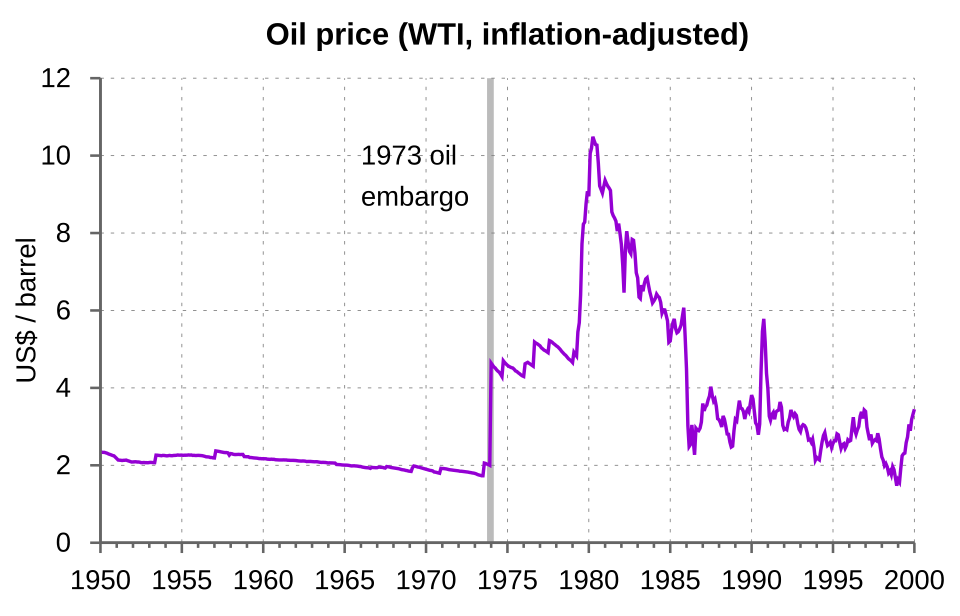
1973 Image : Isochrone · CC BY-SA 4.0 Society Oil crisis Arab producers cut supplies; the era of cheap oil ends.
Wikipedia ↗
1973 Society Coup in Chile Pinochet overthrows Allende; a dictatorship and the first neoliberal laboratory begin.
Wikipedia ↗
1974 Art Performance and body art The artist’s body becomes the work; in Rhythm 0, Abramović lets the audience use 72 objects on her.
Live arts · Wikipedia ↗
Key figures: Marina Abramović , Ana Mendieta
1975 Society Spain leaves Western Sahara The Madrid Accords hand the territory to Morocco and Mauritania without decolonising it. The Sahrawi people are still waiting.
Wikipedia ↗
1976 Art Chicano muralism Heir to Mexican muralism, it tells on the walls of Los Angeles the history the textbooks leave out.
Painting · Wikipedia ↗
Key figures: Judith F. Baca
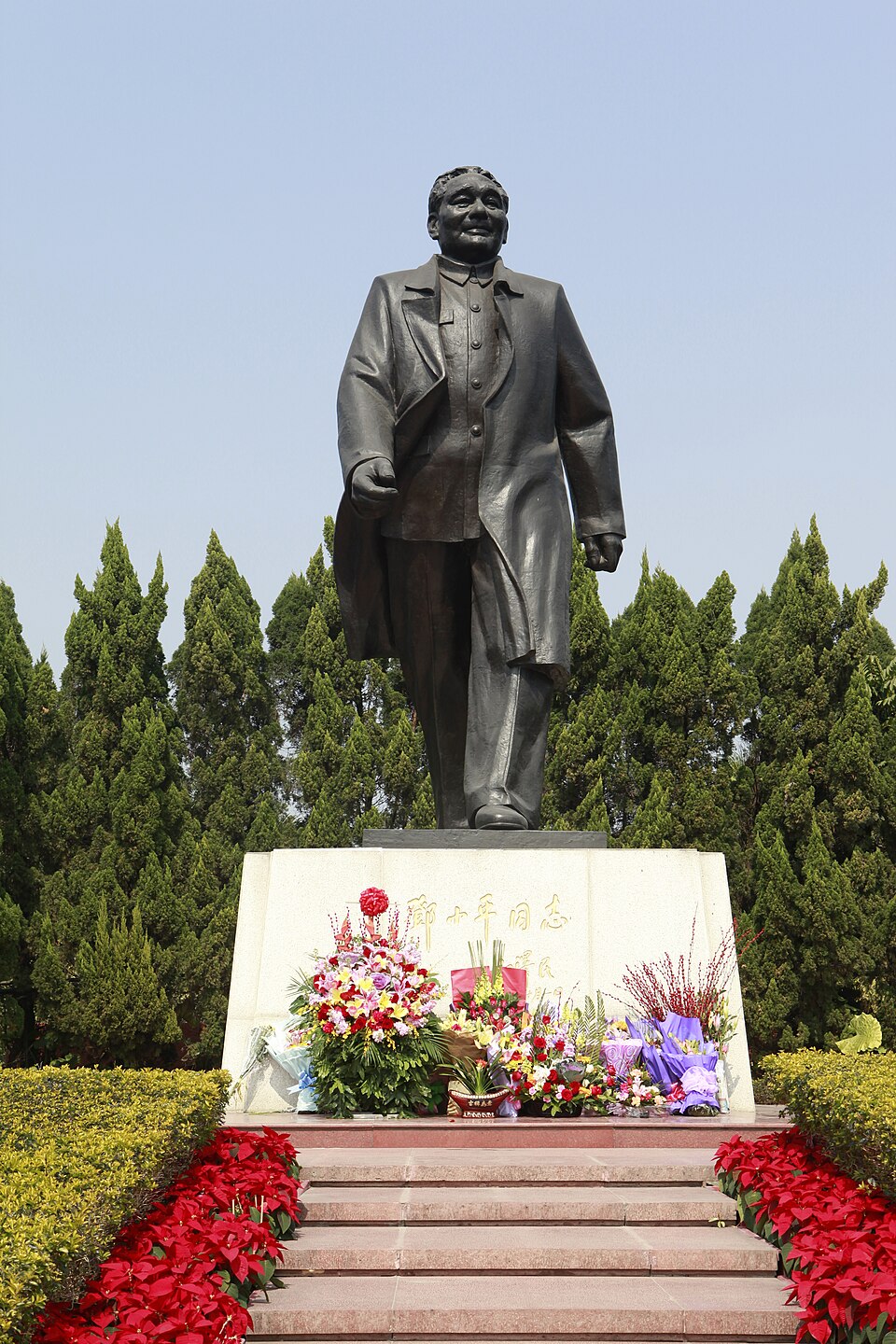
1978 Image : 张元柏 · CC BY-SA 3.0 Society Deng Xiaoping’s reforms China opens its economy to the market and becomes the world’s factory.
Wikipedia ↗
c. 1980 1981 Society HIV/AIDS crisis The epidemic hits the whole world, Africa above all; activism and art, like ACT UP, change public health.
Wikipedia ↗
1982 Society Canary Islands Statute of Autonomy The Canary Islands become an autonomous community.
Wikipedia ↗
1984 Image : CACWifredoLam · CC BY-SA 4.0 Art Havana Biennial The first major biennial devoted to art from Latin America, Africa and Asia, outside the Europe–US circuit.
Installation · Painting · Wikipedia ↗
A global world 1989–today i 1989 Art Magiciens de la Terre (Paris) An exhibition gathering artists from every continent; it opens debate on how the West looks at art from the rest of the world.
Installation · Wikipedia ↗
Key figures: Chéri Samba
1989 Society The Berlin Wall falls The end of the Cold War and a faster pace of economic globalisation.
Wikipedia ↗
1991
1991 Society The World Wide Web is born It is created at CERN in Geneva; within a decade the internet enters daily life.
Wikipedia ↗
1994 Society End of apartheid South Africa’s first non-racial elections; Mandela becomes president.
Wikipedia ↗
1994 Society Zapatista uprising The EZLN rises in Chiapas for Indigenous rights on the day NAFTA comes into force.
Wikipedia ↗
c. 1994–1998 1990s 2001 Society 9/11 attacks The attacks in New York and Washington open two decades of war in Afghanistan and Iraq.
Wikipedia ↗
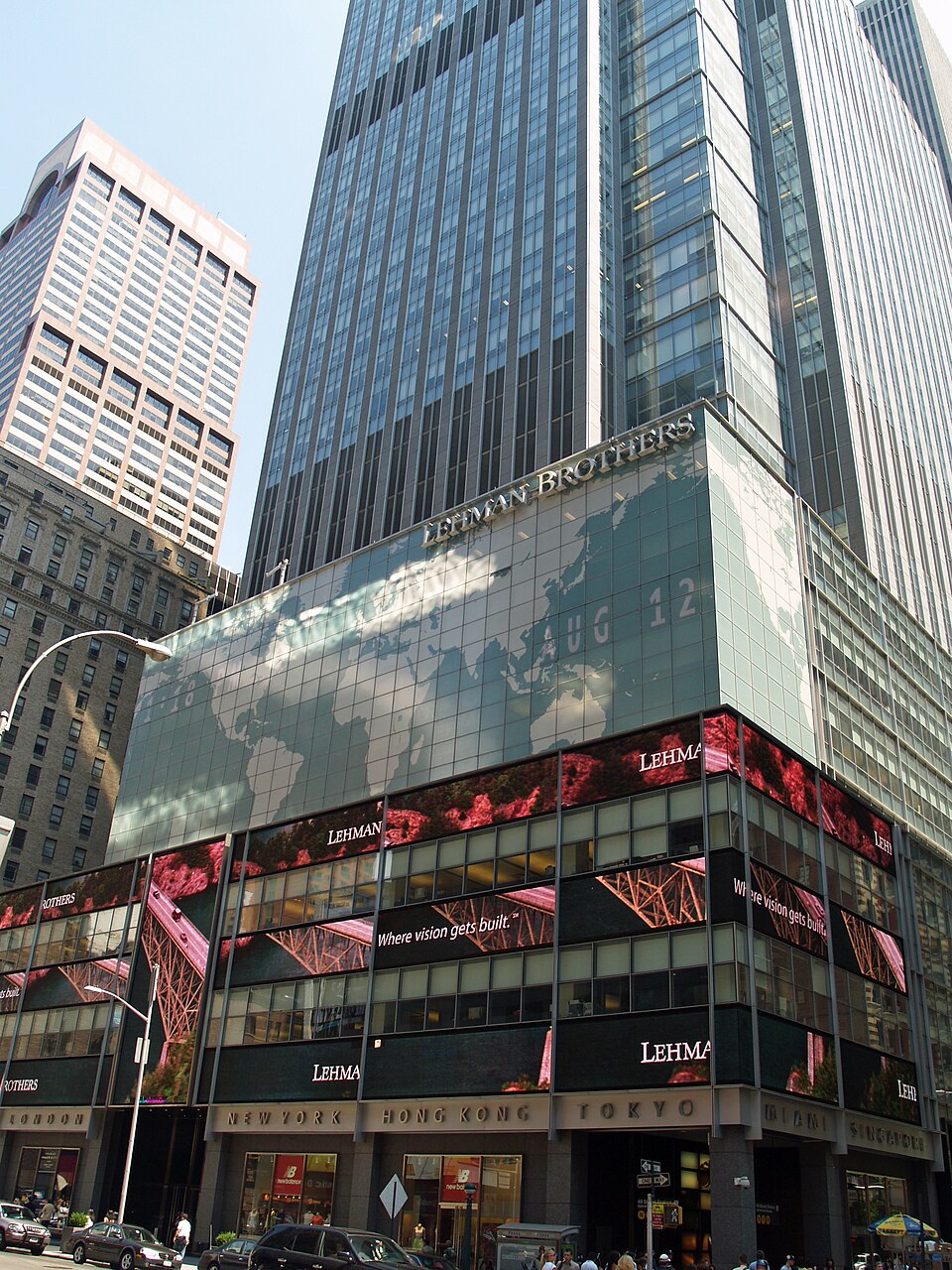
2008 Image : David Shankbone · CC BY-SA 3.0 Society Global financial crisis The collapse of Lehman Brothers sets off a global crisis; in Spain and the Canaries, unemployment and evictions.
Wikipedia ↗
2011 Society Arab Spring Protests from Tunisia to Syria topple governments and open wars.
Wikipedia ↗
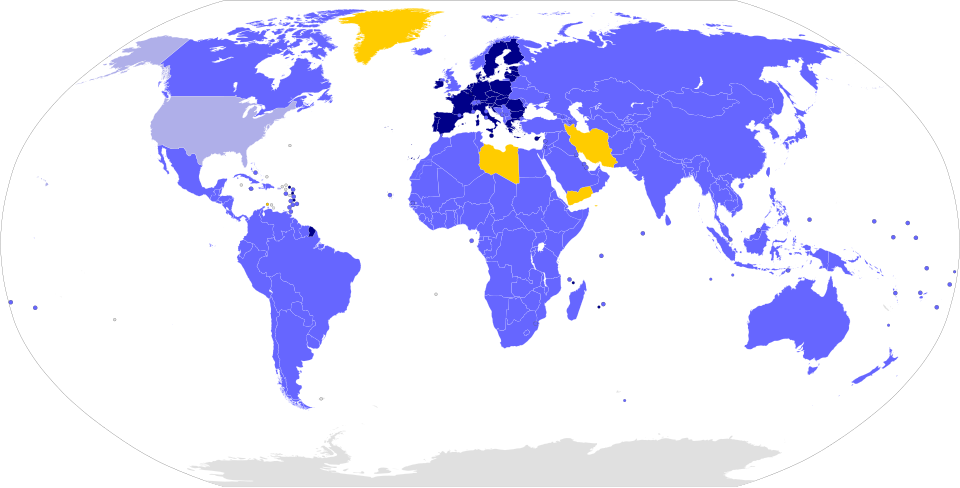
2015 Image : L.tak · CC BY-SA 4.0 Society Paris climate agreement Almost every country commits to limiting global warming.
Wikipedia ↗
2018 Society Sarr–Savoy report It recommends that France return looted African heritage. Restitutions begin, such as Benin bronzes returned to Nigeria.
Wikipedia ↗
To watch
Dahomey (documentary, 2024, Mati Diop) 2020 Image : Gustavo Basso · CC BY-SA 4.0 Society COVID-19 pandemic The virus detected in Wuhan brings the world to a halt; museums and stages close for months.
Wikipedia ↗
2022 Society Generative AI Programs that generate text and images open debates on authorship, work and creativity.
Wikipedia ↗
2022 Society Russian invasion of Ukraine The largest war in Europe since 1945.
Wikipedia ↗
to 10,000 BCE
Deep time Society Small nomadic bands of hunter-gatherers, with little inequality among their members. Homo sapiens leaves Africa and reaches every continent except Antarctica. Knowledge passes on orally, through ritual, adornment and painting. Economy Hunting, fishing and gathering; tools of stone, bone and wood. Long-distance exchange of scarce materials such as ochre, shells or obsidian. Art in this period It depends on the place. If a society is open, its area comes first.
Africa What art was There is no word for “art”: engraving ochre or stringing shells is part of who you are and which group you belong to. What it could be and do To mark identity and belonging, exchange ornaments between distant groups and perhaps fix shared symbols (Blombos, 75,000 years ago). Who made it and how they lived There is no artist trade. Any member of the group could make it; some people were surely more skilled. The Americas What art was The first settlers bring images tied to ritual and landscape, like the hands at the Cueva de las Manos. What it could be and do To mark territory and group memory and to signal sacred or gathering places. Who made it and how they lived There are no specialists: it is a collective practice of hunter-gatherer groups. Asia What art was As in Africa and Europe, images are bound to ritual: in Sulawesi, animals and hunting scenes were painted over 45,000 years ago. What it could be and do To tell the bonds between humans and animals, mark places and perhaps ask for abundance. Who made it and how they lived The group makes it, with no paid specialists: there is no surplus to live from it. Europe What art was Painting deep inside a cave is not decoration: it belongs to ritual and hunting, not to contemplation. What it could be and do To relate to animals and the sacred, gather the group in special places and pass knowledge down the generations. Who made it and how they lived There is no professional artist. The negative hand stencils at Chauvet or Altamira belong to men, women and children. Wikipedia ↗
10,000 BCE–500 CE
Villages, cities and states Society Life becomes settled: villages, then cities, temples and palaces. Hierarchies, kings, armies and forced labour appear. Writing is invented to keep accounts, tribute and laws. Economy Farming and herding arise separately in several regions of the world. Grain surpluses make storage, tribute and full-time specialists possible. Copper, bronze and iron metallurgy; regional trade by land and sea. Art in this period It depends on the place. If a society is open, its area comes first.
Africa What art was In Egypt the image is eternal and effective: what is painted in the tomb exists for the dead. Nok and Kush have their own canons. What it could be and do To secure life after death and uphold the pharaoh’s order and the cosmos. Who made it and how they lived Royal and temple workshops with hereditary trades; the Deir el-Medina craftsmen are paid in grain and go on strike. Canary Islands What art was The first settlers arrive from North Africa with Libyco-Berber signs: carving on rock is both writing and consecrating. What it could be and do To mark territory, pastures and high sacred places, as in Gran Canaria or La Palma. Who made it and how they lived There are no artists: the herding community carves and models; perhaps certain people held that ritual role. The Americas What art was Olmec, Chavín, Paracas or Maya: work serves sacred power; Andean textiles are worth as much as gold. What it could be and do To show rulers as intermediaries with the gods, organise the ritual calendar and dress the dead. Who made it and how they lived Specialists serving the elites; among the Maya some scribes and painters sign and are nobles. Near East What art was There is no separate “art”: a statue of a king or god makes that person or god present. What it could be and do To make the gods present in the temple, legitimise the king, tell of victories and set laws in stone. Who made it and how they lived Specialised temple and palace craftspeople, paid in rations; anonymous and without personal prestige. South and Southeast Asia What art was The image supports the sacred: at first the Buddha is not depicted; later, in Gandhara and Mathura, his figure is created. What it could be and do To teach Buddhism and Jainism, mark pilgrimage sites and show the piety of kings like Ashoka. Who made it and how they lived Guilds of sculptors and stonemasons funded by kings, merchants and donors, who leave their names instead of the artist’s. East Asia (China, Japan) What art was In China, Shang bronzes are ritual vessels for the ancestors; the value lies in the rite, not the object. Under the Han, calligraphy begins to be prized. What it could be and do To communicate with ancestors, order society by rank and accompany the dead (the terracotta warriors). Who made it and how they lived Huge state workshops organised almost like factories; anonymous workers. Europe What art was “Art” is technique (tékhne, ars): knowing how to make something well, a sculptor as much as a shoemaker. Greece invents the idea of ideal beauty. What it could be and do To honour the gods, celebrate the city and its athletes, display Rome’s power and decorate wealthy homes. Who made it and how they lived Craftspeople paid by commission. Some sign, like Phidias, but manual work is seen as inferior. Wikipedia ↗
500–1400
Kingdoms and empires Society Great kingdoms and empires on every continent: Mali, Song, the Abbasids, Tiwanaku, Great Zimbabwe. Universal religions such as Islam, Buddhism and Christianity shape daily life and learning. Cities like Timbuktu, Baghdad and Kaifeng are centres of scholarship and trade. Economy Trade routes link continents: across the Sahara, the Silk Road and the Indian Ocean. Gold, salt, silk, spices, ceramics and enslaved people are traded. Art in this period It depends on the place. If a society is open, its area comes first.
Africa What art was An object is worth what it does: a mask is only complete in the dance; the Ife heads make the king present. What it could be and do To speak with ancestors, judge, heal, initiate the young and show the wealth of the kingdom (Mali, Great Zimbabwe, Ethiopia). Who made it and how they lived Smiths and casters with a special status, feared or respected; they work for the court or the community. Canary Islands What art was Objects and paintings are part of ritual and social order; there is no idea of art apart from it. What it could be and do The Cueva Pintada at Gáldar orders time and space; pintaderas mark belonging; idols are linked to fertility. Who made it and how they lived There are no artists: potters, weavers and herders produce within the community, without payment. The Americas What art was Art and ritual are one: the toltecatl, in Nahuatl, is the wise artist who “dialogues with his heart”. What it could be and do To keep the cosmos in order, honour gods and rulers and count time in codices. Who made it and how they lived Esteemed specialists (feather workers, goldsmiths), often attached to palaces and temples. West Asia and the Islamic world What art was Figures are avoided in religious settings; the highest art is God’s written word, calligraphy, and infinite geometry. What it could be and do To make the divine visible without depicting it and embellish mosques, books and everyday objects. Who made it and how they lived Highly prestigious calligraphers known by name; potters, weavers and architects work in court and bazaar workshops. South and Southeast Asia What art was The temple is an image of the cosmos; treatises (shilpa shastras) set sacred proportions and rules. What it could be and do To enable meeting the divine (darshan), legitimise dynasties and order space, as at Angkor or Borobudur. Who made it and how they lived Hereditary guilds of sculptors and architects with caste status; they work for temples and kings. East Asia (China, Japan) What art was In China, painting and calligraphy belong to the scholar, close to poetry and philosophy. Japan creates its own courtly art in Heian. What it could be and do To express the painter’s character, cultivate oneself and contemplate nature; in Japan, also to narrate court life. Who made it and how they lived Two worlds: the amateur scholar who does not sell, and the court painter or workshop artisan who is paid. Europe What art was Art is a trade in the service of God. The image is “the Bible of those who cannot read”. What it could be and do To teach the faith, show the power of Church and kings, and save the soul of whoever pays for the work. Who made it and how they lived Craftspeople in guilds with apprentices and masters; paid by commission and seldom signing. Wikipedia ↗
1400–1800
Conquest and colonialism Society European kingdoms conquer the Canary Islands, the Americas and enclaves in Africa and Asia. War, epidemics and forced labour cause the collapse of many Indigenous peoples. Slavery becomes racial; mixed societies and resistance, such as maroon communities, emerge. Economy An Atlantic plantation economy: sugar, tobacco and cotton worked by enslaved people. Silver from the Andes and Mexico pays for trade with Asia. The Canary Islands are a stopover on Atlantic routes and an early testing ground for sugar. Art in this period It depends on the place. If a society is open, its area comes first.
Africa What art was The Benin bronzes narrate the history of the court; Europeans take Afro-Portuguese ivories as curiosities. What it could be and do To record the kingdom’s history, honour the oba and the ancestors and trade with Europeans. Who made it and how they lived Guilds of casters living in their own quarters and working only for the king. Canary Islands What art was After the conquest, European Christian art is imposed; Flemish and Andalusian carvings are imported for churches. What it could be and do To evangelise, create devotions (Candelaria) and show the prestige of elite families. Who made it and how they lived Craftsmen and sculptors commissioned by churches and brotherhoods; few live from it alone. The Americas What art was Viceregal art serves evangelisation; it blends European iconography with Indigenous symbols and techniques (Cusco school, featherwork). What it could be and do To convert, teach the faith and display colonial order, including caste paintings. Who made it and how they lived European-style guilds; Indigenous and mestizo artists paint a great deal but are paid less and rarely sign. West Asia and the Islamic world What art was Ottomans and Safavids develop a refined court art: miniature, İznik ceramics, carpets, architecture. What it could be and do To display the splendour of the sultan or shah and beautify the book, the mosque and the palace. Who made it and how they lived Court workshops (nakkaşhane) with named masters on a fixed state salary. South and Southeast Asia What art was At the Mughal court, painting fuses Persian and Indian traditions and becomes observation of the world and portraiture. What it could be and do To tell the emperor’s story, document nature and display imperial power. Who made it and how they lived Salaried imperial workshop painters; some are known by name, like Basawan or Mansur. East Asia (China, Japan) What art was China keeps the ideal of the scholar painter; in Japan, ukiyo-e portrays the city’s “floating world”. What it could be and do To cultivate, give as gifts and express values in China; in Edo, to entertain and advertise actors and courtesans. Who made it and how they lived Scholar painters who do not sell (though they receive gifts) and, in Japan, printmakers working for publishers in a mass market. Europe What art was With the Renaissance art becomes “a mental thing”, alongside science and poetry. The idea of genius is born. What it could be and do To glorify princes and popes, persuade in the Counter-Reformation through the Baroque and, in Holland, decorate bourgeois homes. Who made it and how they lived From guild to academy: the artist signs, asks high fees and seeks patrons; in Amsterdam they already sell on a market. Wikipedia ↗
1800–1900
Revolutions and colonial empires Society Independence across the Americas and in Haiti, and the gradual abolition of slavery. Cities and the working class grow, with trade unions and new political movements. European powers divide up Africa and much of Asia. Economy Industrial revolution: coal, steam, railways and factories. Colonies supply raw materials (rubber, cotton, minerals) and captive markets. Art in this period It depends on the place. If a society is open, its area comes first.
Africa What art was Ritual objects are looted and placed in European ethnographic museums as “curiosities” or proof of a supposed backwardness. What it could be and do At home they keep acting in ritual; in Europe they become colonial trophies (Benin, 1897). Who made it and how they lived Sculptors keep working on commission for kings and communities; their names are lost when the works reach Europe. Canary Islands What art was Art is understood in European terms, with academies and exhibitions; the island elite looks to Madrid and Paris. What it could be and do To portray the bourgeoisie and paint the islands’ landscape and history. Who made it and how they lived Few professional artists; they live from portraits, teaching and island council grants to study abroad. The Americas What art was The new republics found academies and call for an art that tells the nation; in the USA landscape becomes a symbol of identity. What it could be and do To paint independence, heroes and the land itself; to shape citizens. Who made it and how they lived Artists funded by the state to train in Europe; the private market is still small. West Asia and the Islamic world What art was Europe paints an imagined East (Orientalism); Istanbul founds academies and museums on the European model. What it could be and do To modernise the Ottoman Empire and, with Osman Hamdi, answer the European gaze. Who made it and how they lived The academy-trained painter appears, often educated in Paris, though the local market is small. South and Southeast Asia What art was Colonial rule separates “fine art” from “craft” and sets up British-style art schools. What it could be and do To document the colony for the British (Company painting) and, with Raja Ravi Varma, imagine the gods in a national key. Who made it and how they lived Painters paid by colonial patrons; Varma sells lithograph reproductions to a mass public. East Asia (China, Japan) What art was In the Meiji era Japan adopts the word “bijutsu” (fine arts) and separates Western-style (yōga) from Japanese-style (nihonga) painting. What it could be and do To modernise the nation, compete with the West and export objects that inspire Japonisme in Europe. Who made it and how they lived Academies and official exhibitions are created; the selling artist appears alongside export craftspeople. Europe What art was Art becomes autonomous: “art for art’s sake”. The museum is born to hold it and the artist is seen as a free genius. What it could be and do To express emotion (Romanticism), denounce (Realism) or capture perception (Impressionism), as well as serve the nation. Who made it and how they lived A liberal profession: artists sell at the Salon, to dealers and in galleries, or scrape by in bohemia. Wikipedia ↗
1900–1918
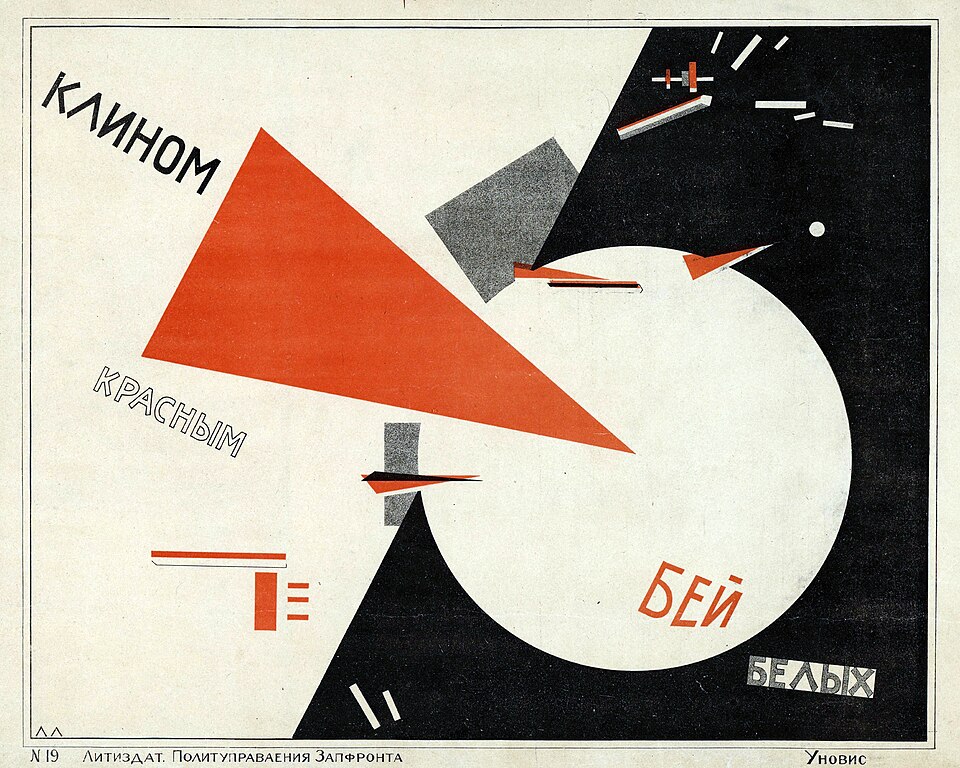
Avant-gardes and the Great War Society Colonial empires reach their peak; anti-colonial movements grow. The Mexican Revolution (1910) and the Russian Revolution (1917). The First World War also mobilises hundreds of thousands of colonial soldiers. Economy Electricity, cars, the telephone and the assembly line. Rubber, minerals and colonial crops feed European and US industry. Art in this period It depends on the place. If a society is open, its area comes first.
Africa What art was In Paris masks are viewed as “primitive art” without context; in Africa they remain functional objects. What it could be and do They inspire Cubism; at home they serve ritual, justice and initiation. Who made it and how they lived Sculptors known in their communities but anonymous in European collections. Canary Islands What art was With Néstor de la Torre, modernism blends with the local: the sea, the body and the islands’ flora. What it could be and do To create a modern Canarian identity and decorate public buildings and theatres. Who made it and how they lived Artists who travel between Madrid and the islands and live from public and private commissions. Latin America and the Caribbean What art was Academies coexist with modernisms arriving from Europe; the Mexican Revolution (1910) prepares a new art. What it could be and do To show modernity and seek one’s own roots. Who made it and how they lived Artists trained in Europe who return; the state and local bourgeoisie are their clients. Europe and North America What art was Art is defined by breaking with earlier art: form, colour and object are freed from imitation. What it could be and do To express inner life, change how we see and sometimes change society; manifestos say what art is. Who made it and how they lived A liberal profession living off dealers and collectors; many artists are poor at first. South Asia and the Middle East What art was The Bengal School, with Abanindranath Tagore, rejects British academicism and seeks an “Indian” art. What it could be and do To build the nation against colonialism through art. Who made it and how they lived Artist-teachers and reformers supported by nationalist patrons. East Asia (China, Japan) What art was China moves from empire to republic (1911) and debates adopting Western painting; Japan already has a fine-art system. What it could be and do To modernise and strengthen the nation without losing its own tradition. Who made it and how they lived Art school teachers and painters who sell at exhibitions. Wikipedia ↗
1918–1945
Interwar years and the Second World War Society The rise of fascism, the Spanish Civil War and the Second World War, with the Holocaust. Black and anti-colonial affirmation: the Harlem Renaissance, Négritude, the Indian independence movement. Women win the vote in many countries. Economy The 1929 crash and the Great Depression; mass unemployment. War economies and heavy state intervention. Art in this period It depends on the place. If a society is open, its area comes first.
Africa What art was Colonial schools (Makerere, Achimota) teach European “fine art”; in Paris, Négritude reclaims Africanness. What it could be and do To train a modern elite and, at the same time, affirm the value of African cultures. Who made it and how they lived Teachers and students of art schools alongside traditional sculptors working on commission. Canary Islands What art was Gaceta de Arte (1932) connects Tenerife to the avant-garde; the Luján Pérez School seeks an Indigenist Canarian art. What it could be and do To modernise island culture, host the 1935 Surrealist exhibition and look to the Aboriginal past. Who made it and how they lived Artists, writers and teachers funded by magazines, patrons and teaching. Latin America and the Caribbean What art was Mexican muralism makes public and political art; in Brazil “anthropophagy” devours the European to create something new. What it could be and do To educate the people, tell history from below and affirm Indigenous and mestizo identities. Who made it and how they lived The Mexican state pays the muralists as workers; they form a union. Europe and North America What art was Some want to join art and life (Bauhaus, Constructivism); others explore the unconscious (Surrealism). Totalitarian states control it. What it could be and do To design objects for all, serve the revolution, explore dreams or make propaganda; the Nazis persecute “degenerate art”. Who made it and how they lived Salaried designer, market artist or state employee; in the USA the government pays artists during the Depression. South Asia and the Middle East What art was Tagore’s school at Santiniketan and Amrita Sher-Gil combine the modern and the Indian. What it could be and do To affirm identity against empire and portray rural life. Who made it and how they lived Teachers, exhibiting artists and patrons from the independence-minded elite. East Asia (China, Japan) What art was In China Lu Xun promotes the woodcut as an art of protest; in Japan art ends up serving militarism. What it could be and do To raise awareness and make propaganda; in wartime, to paint battles. Who made it and how they lived Committed artists publishing in magazines and, in Japan, painters mobilised by the army. Wikipedia ↗
1945–1968
Post-war and decolonisation Society Independence in Asia and Africa; Bandung and the Non-Aligned Movement. The Cold War between the US and the USSR; revolutions in China and Cuba. The civil rights movement in the US. Economy Reconstruction and fast growth in Europe and Japan; the welfare state. Mass consumption, television and the start of mass tourism, in the Canary Islands too. Art in this period It depends on the place. If a society is open, its area comes first.
Africa What art was With independence come national modernisms: the École de Dakar, Zaria’s “natural synthesis”, Oshogbo. What it could be and do To build national and pan-African identity after colonialism. Who made it and how they lived The state acts as patron (Senghor in Senegal); there are also workshops and a tourist market. Canary Islands What art was Under Franco, artists like Manolo Millares (El Paso) use torn matter to speak of drama. What it could be and do To renew Spanish art, revisit the Aboriginal past in another key and, with César Manrique, look at landscape. Who made it and how they lived Many must emigrate to Madrid; they live from galleries, commissions and, later, tourism. Latin America and the Caribbean What art was Abstraction, kinetic and Neo-Concrete art: the viewer becomes part of the work (Lygia Clark, Hélio Oiticica). What it could be and do To build modern nations and later to involve the public’s body and life. Who made it and how they lived Artists supported by biennials and developmentalist states; many emigrate to Paris or New York. Europe and North America What art was New York replaces Paris: art is gesture (Abstract Expressionism) and later consumer object (Pop). What it could be and do To express individual freedom, also as a Cold War weapon, and reflect consumer society. Who made it and how they lived A market of galleries and museums; the star artist who gets rich appears, like Warhol. South Asia and the Middle East What art was With Indian independence, Bombay’s Progressive Artists’ Group seeks a modern art free from tutelage. What it could be and do To imagine the new nation and engage with international modernism. Who made it and how they lived Independent artists with few collectors; some emigrate to London or Paris. East Asia (China, Japan) What art was In China art is a political tool (Socialist Realism); in Japan, Gutai makes action and matter the work. What it could be and do To serve the people and the revolution in China; in Japan, to break free after the war. Who made it and how they lived In China, artists as civil servants in state associations; in Japan, independent artists with industrial patrons. Wikipedia ↗
1968–1989
Countercultures and dictatorships Society 1968: student and worker revolts in Paris, Mexico City, Prague and elsewhere. Feminisms, environmentalism, the LGBT movement and Indigenous struggles. Military dictatorships in Latin America; the end of Franco and the transition in Spain. Economy The 1973 oil crisis and the end of post-war growth. Neoliberalism arrives: privatisation, foreign debt and structural adjustment in the Global South. Art in this period It depends on the place. If a society is open, its area comes first.
Africa What art was In Congo, Chéri Samba’s popular painting comments on urban life; in South Africa art joins the struggle against apartheid. What it could be and do To comment on and criticise society, inform and resist. Who made it and how they lived Sign painters selling on the street and activist artists in community centres. Canary Islands What art was César Manrique sees art as an intervention in the landscape: on Lanzarote, art, nature and tourism come together. What it could be and do To protect the land from mass tourism and create a modern identity. Who made it and how they lived An artist with public commissions from island councils; democracy brings new institutions. Latin America and the Caribbean What art was Under dictatorships art turns conceptual and political (Tucumán Arde, CADA, mail art). What it could be and do To denounce, evade censorship and create networks of resistance. Who made it and how they lived Persecuted or exiled artists, with no market, who organise in collectives. Europe and North America What art was Art can be an idea, an action or the body itself (Conceptual art, performance, Fluxus, feminism). What it could be and do To critique the museum, the market and society; in the 1980s the market returns in force. Who made it and how they lived Artists who refuse to sell objects and live from grants and teaching, and others who get rich in the 1980s boom. South Asia and the Middle East What art was In India the narrative figuration of Baroda emerges; in Iran the 1979 revolution sets new limits. What it could be and do To tell everyday and political life; in Iran, to serve the revolution or speak in exile. Who made it and how they lived University teachers and exiled artists in a still-small market. East Asia (China, Japan) What art was In Japan, Mono-ha works with materials as they are; in China, after Mao, groups like the Stars (1979) demand freedom. What it could be and do To reflect on matter and space; in China, to open room for individual expression. Who made it and how they lived In China, artists outside the official system; in Japan, galleries and universities. Wikipedia ↗
1989–today
A global world Society The end of the Cold War and of apartheid; a multipolar world. The internet and social media change how we communicate and organise. Large-scale migration; today over half of humanity lives in cities. Economy Globalised production and trade; China and India rise. Mass tourism, which puts pressure on land and housing in the Canary Islands. The climate crisis as a shared horizon. Art in this period It depends on the place. If a society is open, its area comes first.
Africa What art was Contemporary African art enters the global circuit; restitution of looted works is debated. What it could be and do To recover history, recycle materials (El Anatsui) and narrate the diaspora. Who made it and how they lived International market and biennials (Dakar); many artists work between Africa and Europe. Canary Islands What art was New museums (CAAM, TEA) and biennials place the Canaries between Europe, Africa and the Americas. What it could be and do To think about territory, tourism and Atlantic identity. Who made it and how they lived Artists living from teaching, grants and public commissions; the local market is small. Latin America and the Caribbean What art was Art works on the memory of violence and on territory (Doris Salcedo, Teresa Margolles). What it could be and do To remember victims, question official history and defend the land. Who made it and how they lived Biennials and the international market give visibility, but most artists are precarious. Europe and North America What art was Almost anything can be art if the institution accepts it; global markets, biennials and digital work coexist. What it could be and do To create economic value, denounce, build communities or generate experiences. Who made it and how they lived A wealthy minority and a precarious majority living on grants, teaching and other jobs. South Asia and the Middle East What art was The Gulf buys prestige with major museums; India launches biennials like Kochi. What it could be and do To build a national image and speak of exile and identity (Shirin Neshat). Who made it and how they lived States and private collectors fund artists; many live in the diaspora. East Asia (China, Japan) What art was China creates a huge contemporary art market; Murakami merges art, brand and product. What it could be and do To represent the modern nation, criticise power (Ai Weiwei) or sell globally. Who made it and how they lived Artists running large studio-companies and a majority of precarious young artists. Wikipedia ↗
Initial sample. Ancient dates are approximate and some are debated.